Inside Sand Battery V2: 250 kWh & Direct Food Drying
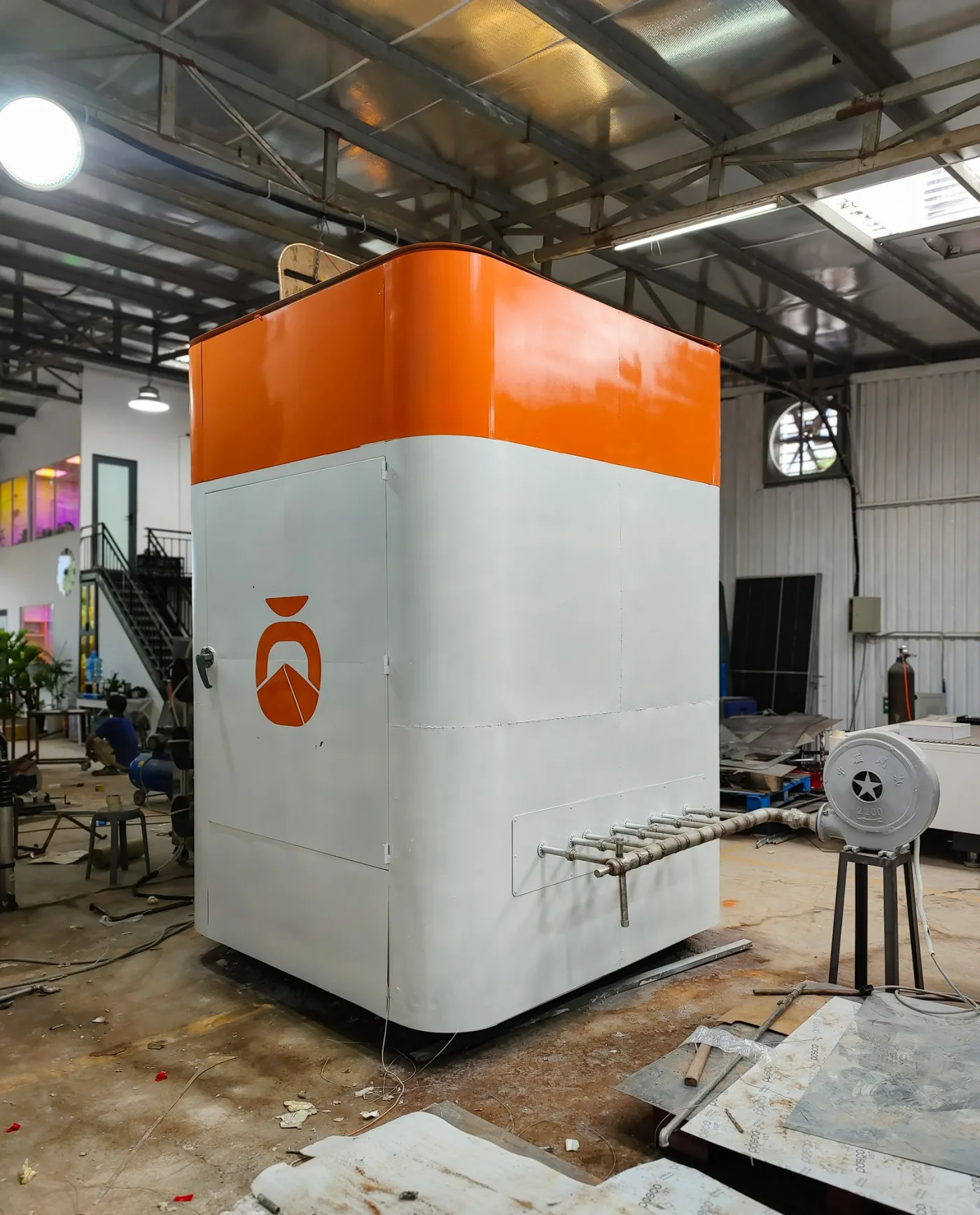
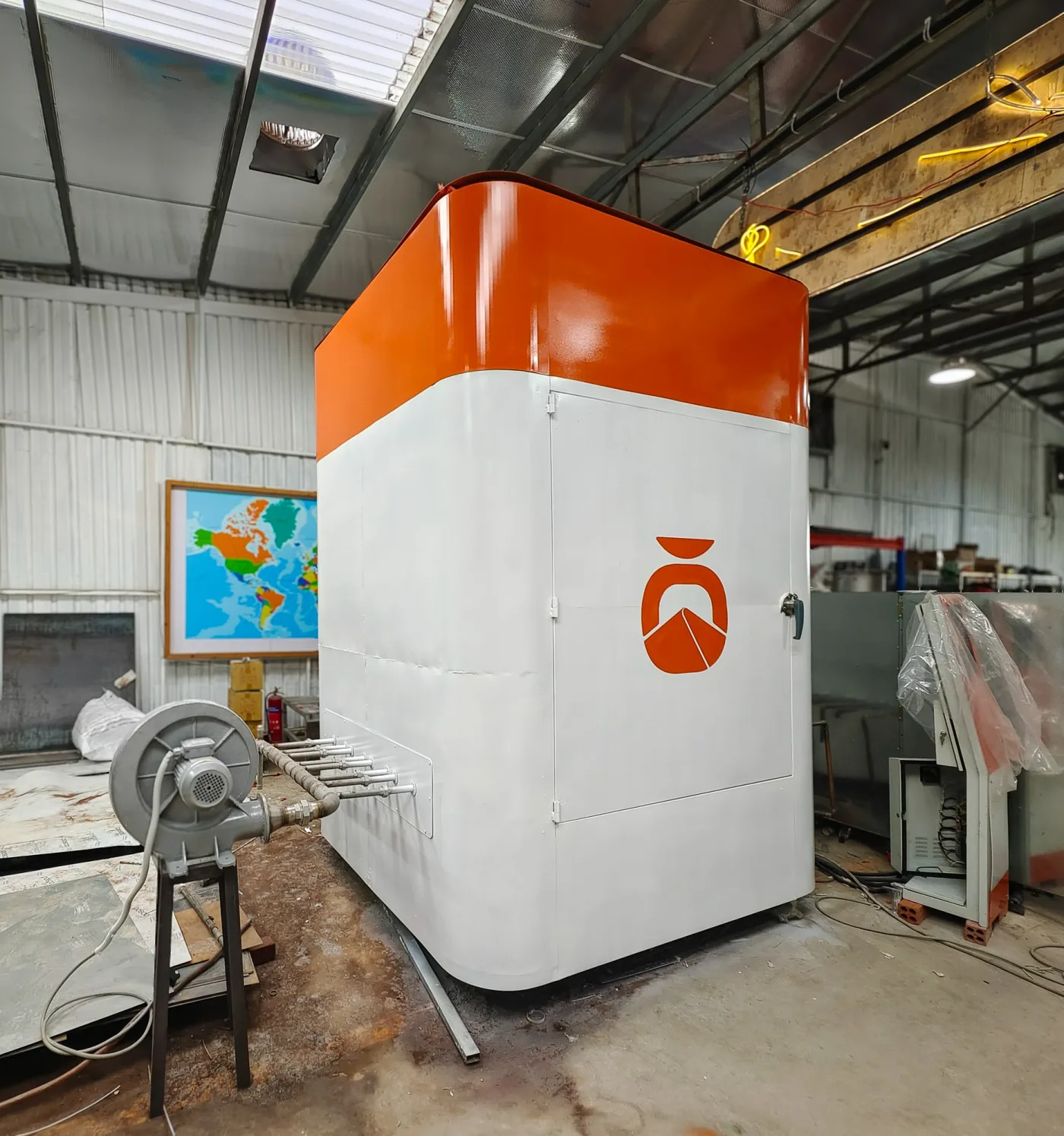
Sand Battery V2 scaled the 88 kWh V1 architecture up to 250 kWh (~2.2 tonnes of sand) and wrapped it for real workshop and agricultural deployment: rounded-corner sheet metal, a removable 40 cm orange top hood, four curved serpentine finned loops feeding a 4-port manifold, a slim control kiosk with an umbilical cable, and a mobile stainless food dryer coupled directly to the hot-air outlet.
1. Scaling Math: 2.2 Tonnes of Sand to 250 kWh
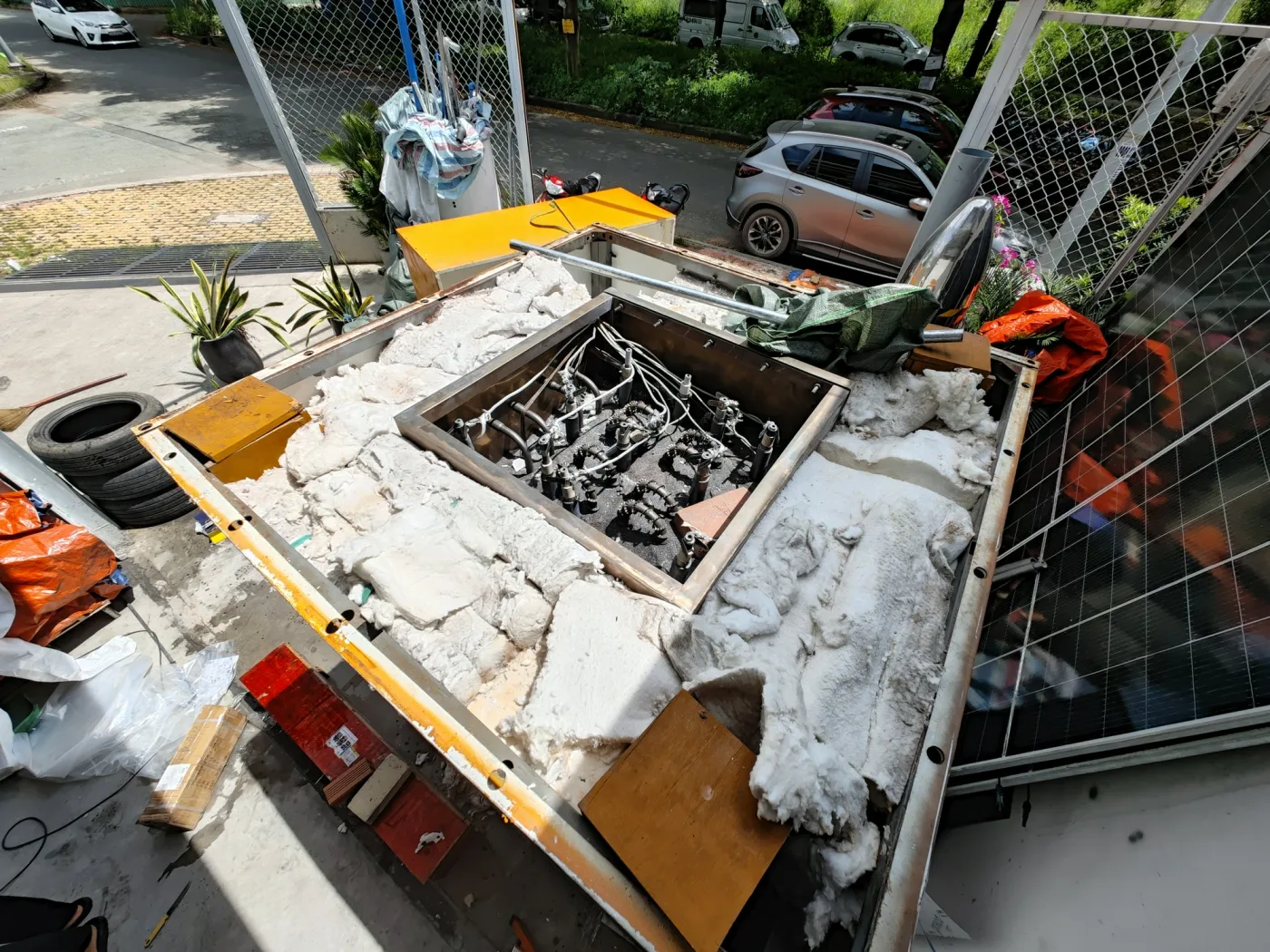
Growing the footprint from 1.6 x 1.6 x 2.4 m (V1) to 2.2 x 2.2 x 2.75 m (V2) nearly triples the active sand mass while keeping wall insulation at ~30 cm of white ceramic fiber blanket:
4 Curved Serpentine Loops (4 In / 4 Out)
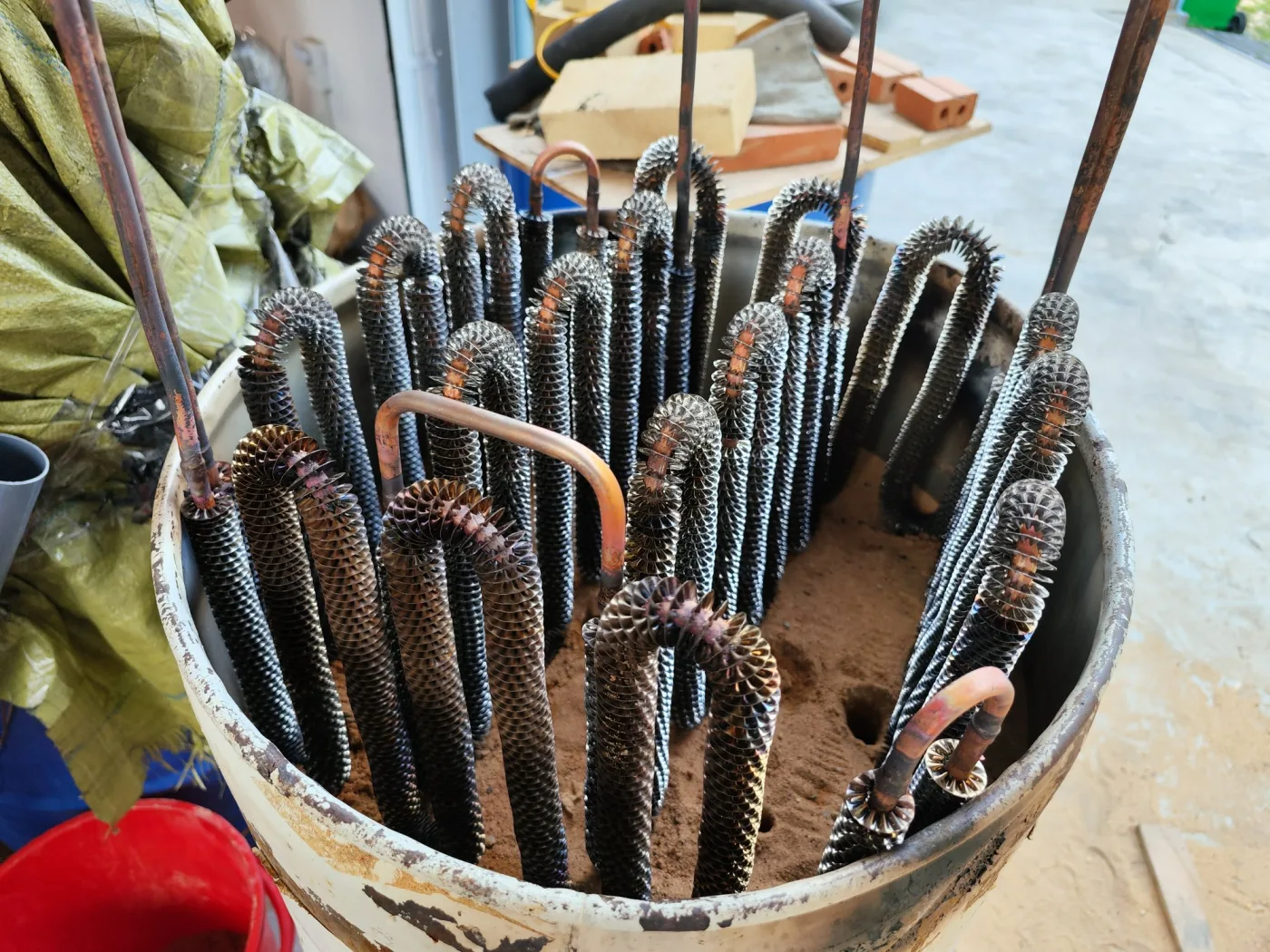
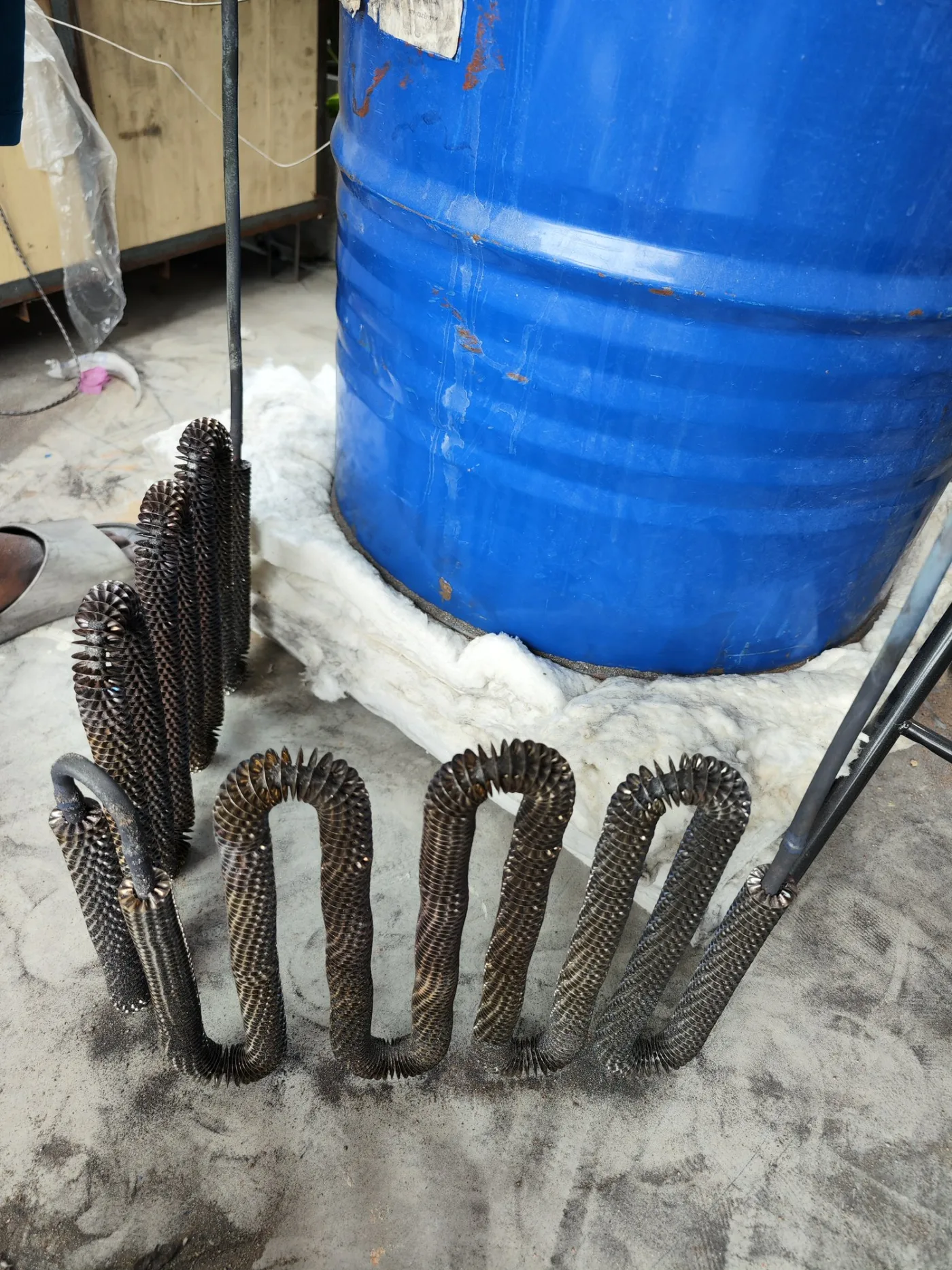
Instead of a single collector pipe splitting internally, V2 brings four parallel inlet stubs through the blower-side wall and four parallel outlet stubs out the dryer-side wall. Inside the core, each pipe snakes through vertical U-bends wrapped in dense radial spiral fins, multiplying residence time inside the hot sand bed.
Direct Commercial Food Dryer Coupling
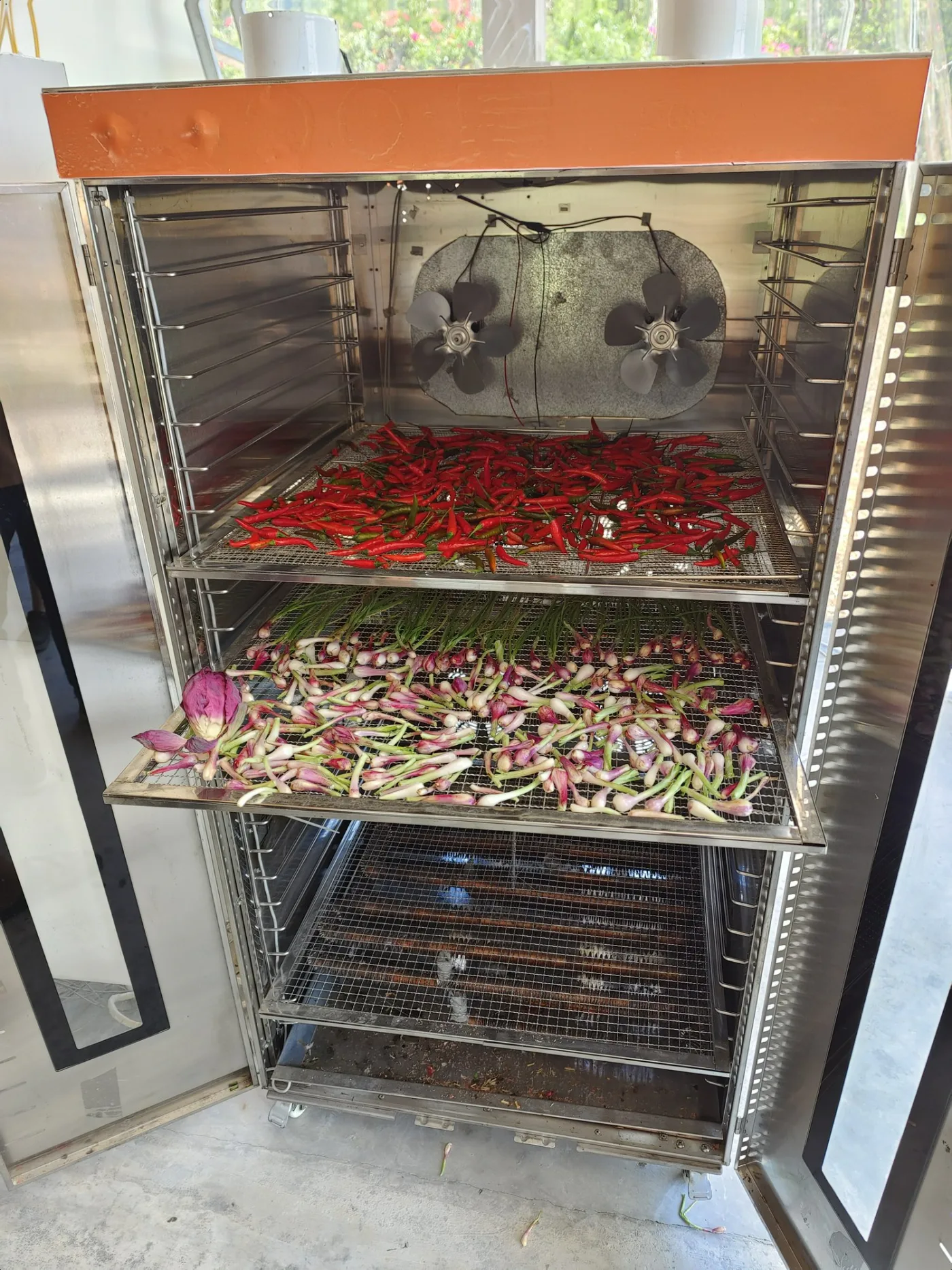
Clean ambient air enters the centrifugal blower on its 4-leg stand, passes through the four finned loops, and exits via the 4-port hot-air header straight into a wheeled stainless dehydrator cabinet. Twin rear circulation fans move heated air across stacked wire-mesh trays of chilies, shallots, herbs, or fruit.
2. Real Hardware Photos (Jul 2024 Workshop Build)
The 3D reconstruction above was modeled from these workshop assembly and drying test photographs:
3. Frequently Asked Questions
What changed mechanically from Sand Battery V1 to V2?
V2 nearly triples capacity from 88 kWh to 250 kWh (~2.2 tonnes of sand), rounds the outer steel corners, adds a removable 40 cm orange top lid for top-down servicing, upgrades to 4 parallel curved serpentine finned loops (4 inlets and 4 outlets), slims down the control kiosk, and couples directly to a commercial stainless food dryer.
Why switch from straight finned pipes to 4 curved serpentine loops?
Curved serpentine finned tubes pack longer heat-transfer surface area inside the sand bed while dividing airflow across four parallel ports, keeping blower pressure drop low and outlet temperature steadier during long drying runs.
Why place the 2-row solar array opposite the food dryer output?
Keeping the two ground-mounted solar rows clear on the blower/inlet side leaves the hot-air output side unobstructed for rolling wheeled stainless food dryers in and out during loading and unloading.