Inside Sand Battery V0: 20 kg of White Sand on a Balcony
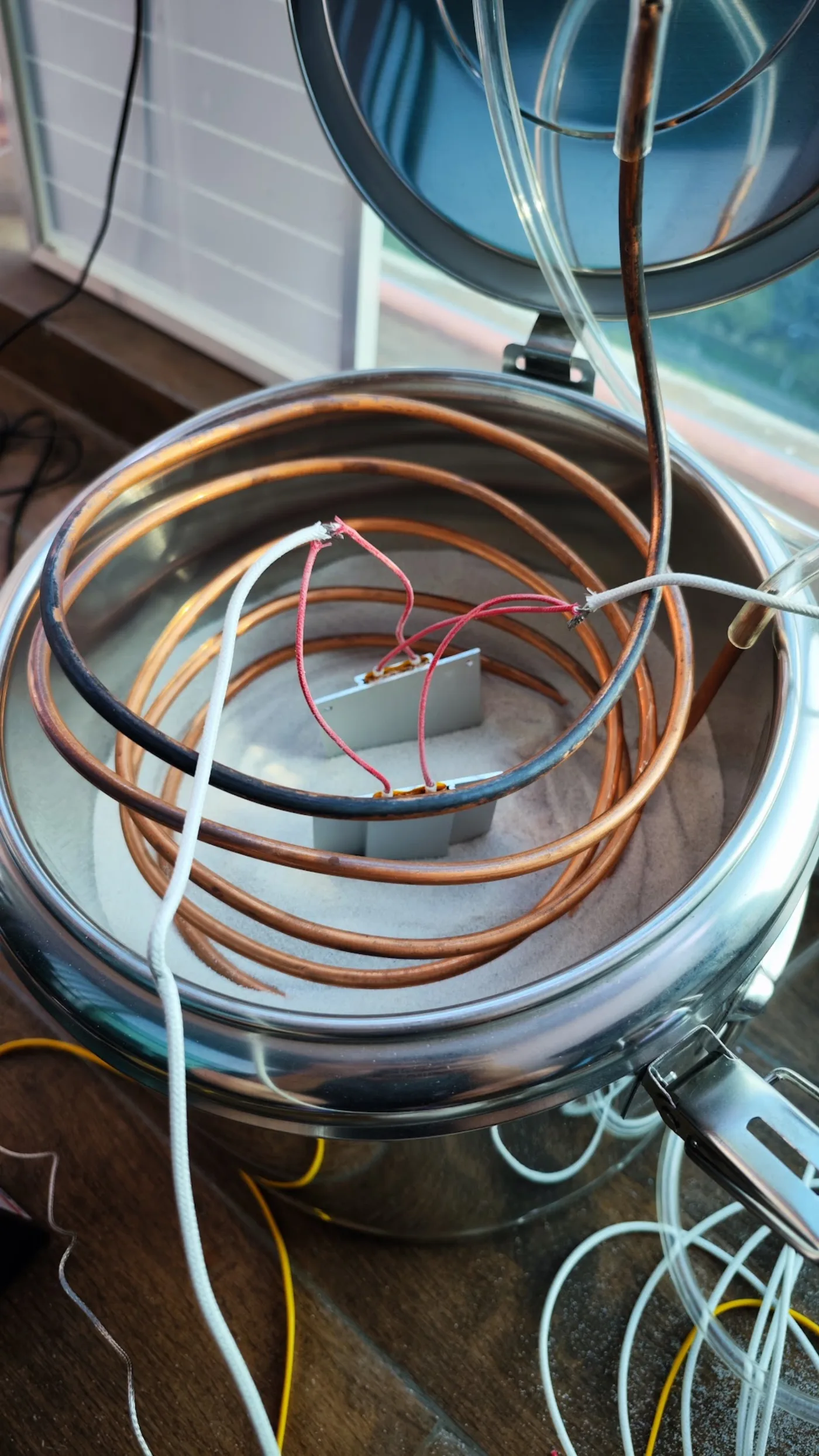
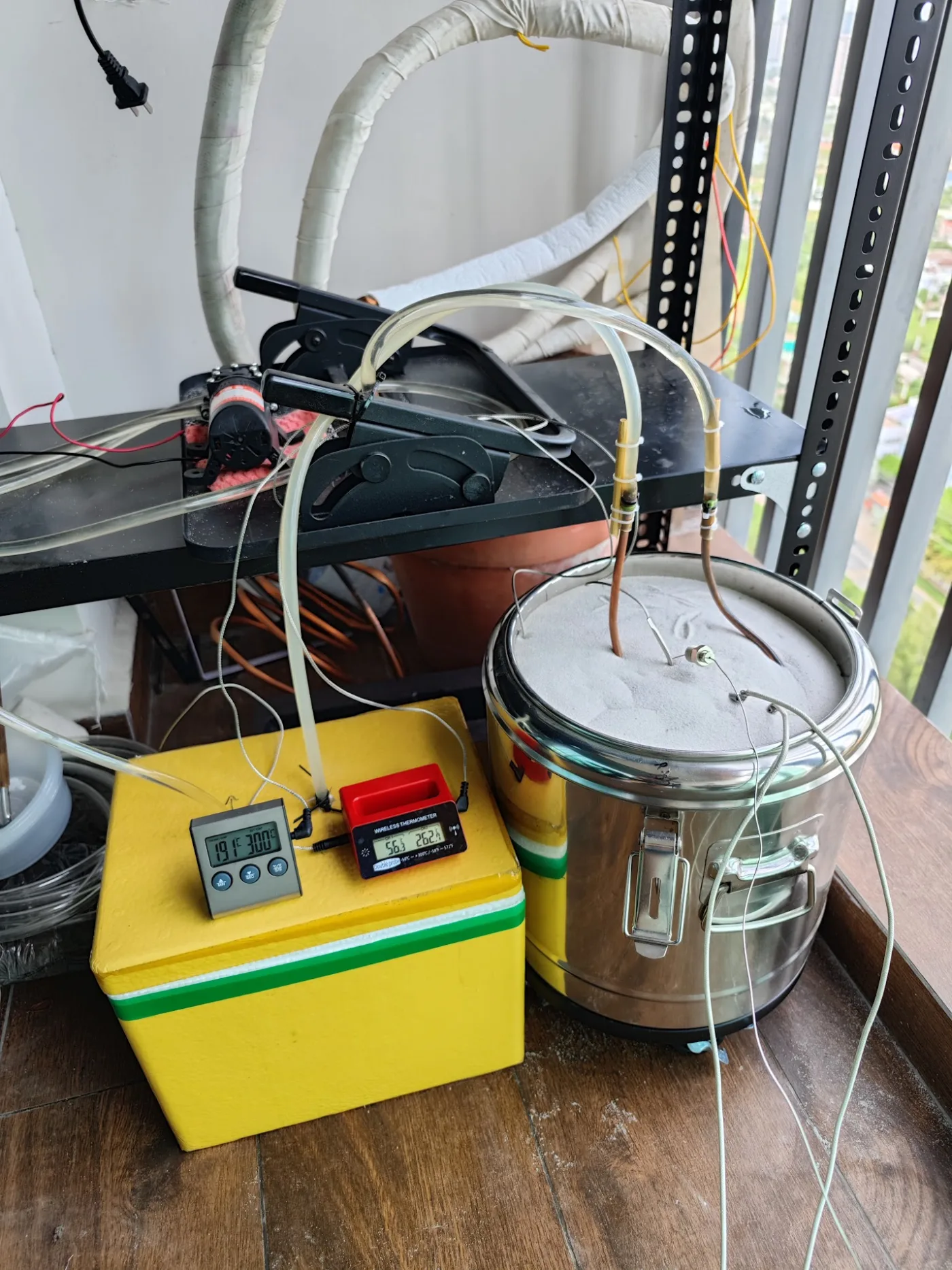
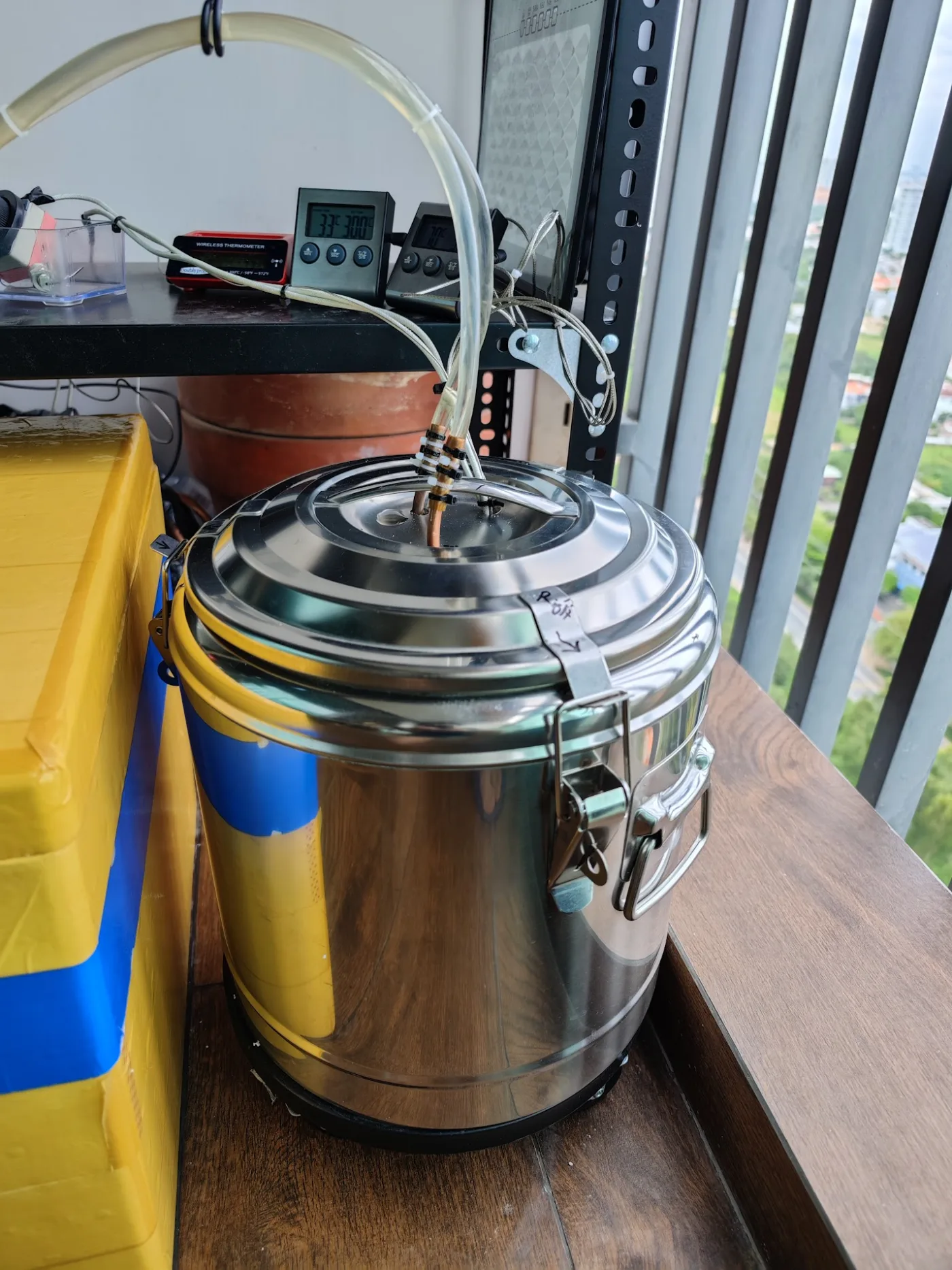
Before steel frames, 600°C heating rods, or patent drawings, the first sand battery experiment sat on a balcony in November 2022. It used an off-the-shelf insulated stainless food container, 20 kg of white sand, two 220V PTC heaters, a coiled copper pipe, and a yellow foam box holding 20 liters of water.
1. Benchtop Sensible Heat Math (20 kg Sand vs 20 L Water)
Every part in V0 was chosen for speed of testing rather than scale. Even at 20 kg, the same sensible heat equation governs both the sand core and the water load:
Charging: 20 kg White Silica Sand to 240°C
Dry white quartz sand has a specific heat $c_p approx 0.83 ext{ kJ/(kg}cdot ext{K)}$. Raising 20 kg from 25°C ambient to the 240°C self-limiting ceiling of the two 220V AC PTC elements ($Delta T = 215 ext{ K}$) stores:
$Q_{ ext{sand}} approx 20 imes 0.83 imes 215 approx 3.57 ext{ MJ} approx 0.99 ext{ kWh}$ gross thermal energy.
Discharging: Warming 20 L of Water to 60°C
Liquid water has a much higher specific heat ($c_p approx 4.18 ext{ kJ/(kg}cdot ext{K)}$). Circulating 20 liters (~20 kg) through the submerged copper coil via the 12V diaphragm pump and raising it from 25°C to 60°C ($Delta T = 35 ext{ K}$) absorbs:
$Q_{ ext{water}} approx 20 imes 4.18 imes 35 approx 2.93 ext{ MJ} approx 0.81 ext{ kWh}$.
2. Original Prototype Photos (November 2022)
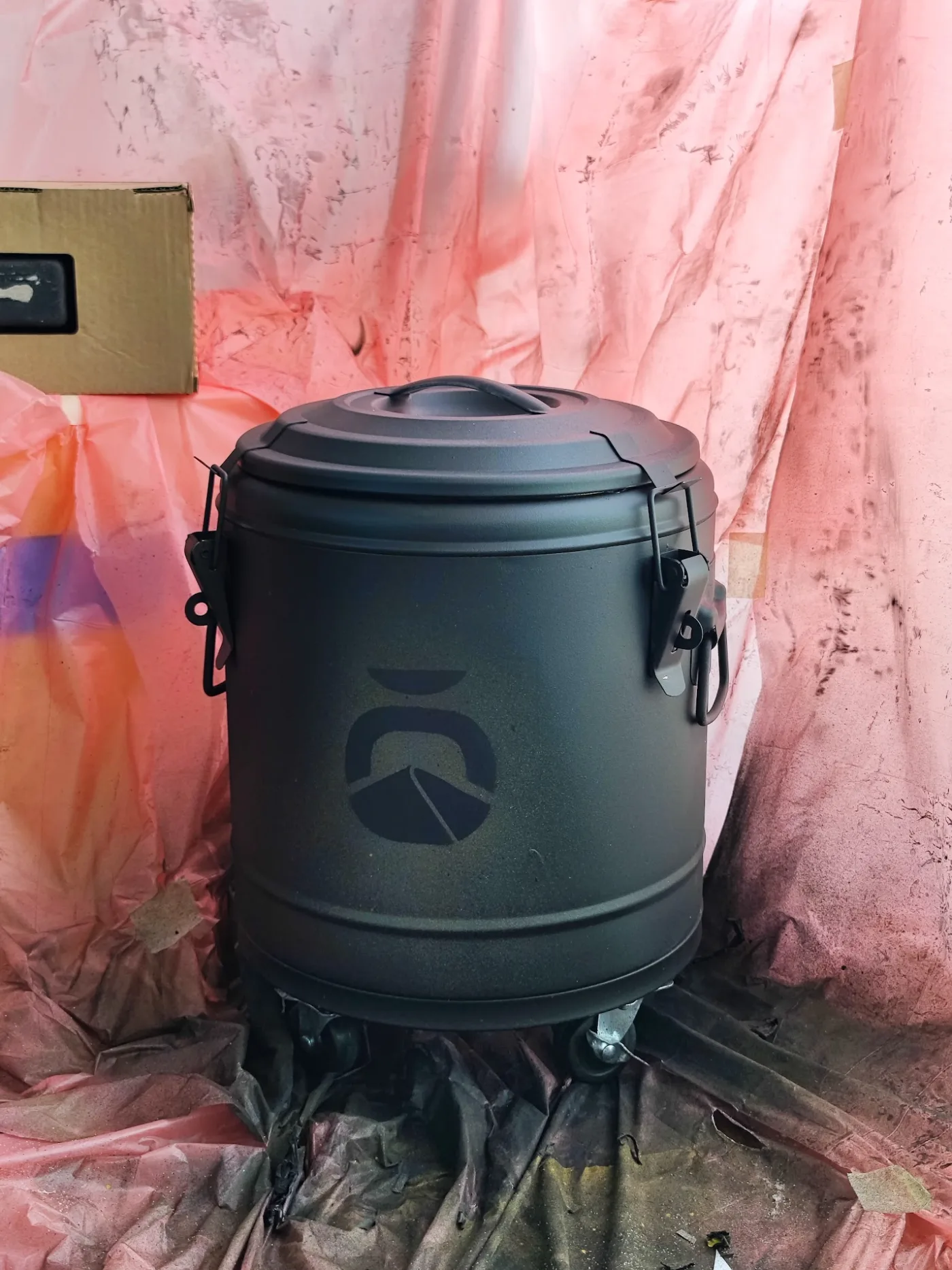
The 3D cutaway above was reconstructed directly from these four bench photos taken during assembly and testing.
3. What V0 Proved & What Drove V1
V0 confirmed that cheap dry sand could store electric heat and warm a practical water load on a balcony. It also exposed four hardware bottlenecks that directly shaped Sand Battery V1:
| Subsystem | V0 Bench Prototype (Nov 2022) | V1 (Aug 2023, 88 kWh) |
|---|---|---|
| Storage Core | ~20 kg pure white silica sand (~0.3 W/m·K, steep hot spots) | ~800 kg sand + 20-50% graphite blend (~1.8-3.0 W/m·K) |
| Heating Elements | 2x 220V AC PTC blocks, self-limited at 240°C | 16x 1,350 mm resistive rods in sleeves, up to 600°C |
| Heat Extraction | Submerged copper coil + clear PVC tubes + 12V water pump (60°C water) | 8x finned Ø27 mm Inox 304 pipes + centrifugal blower (200°C hot air) |
| Standby Sealing | No isolation valves; copper risers conduct heat straight through lid | Split-pipe alumina-sand isolation valves inside 20+ cm ceramic wool walls |
| Instrumentation | Off-the-shelf consumer BBQ thermometers (capped at 300°C) | 10 high-temperature thermocouples + embedded AIoT controller & VFD |
4. Frequently Asked Questions
How much heat did the 20 kg Sand Battery V0 prototype store?
Heating 20 kg of dry silica sand from 25°C to 240°C stores roughly 3.57 MJ (~1.0 kWh) of gross sensible heat, enough to warm the 20-liter external foam tank from 25°C up to about 60°C (~0.81 kWh).
Why did V0 use 220V PTC heaters instead of standard resistive rods?
PTC elements naturally curb their own current draw near 240°C, so they could be plugged into 220V AC without a PID controller or high-temp SSR. The tradeoff was a 240°C ceiling that capped stored energy density.
Why did later versions replace the copper water coil with hot-air pipes?
Water inside a hot sand bed flashes to steam if the pump pauses, and soft PVC tubing softens near boiling. Switching to atmospheric-pressure hot air through finned stainless pipes made 600°C operation safe and practical for drying loads.