← All posts

5 Concrete Due-Diligence Standards for VCs: Performative NGO Grants, TRL Audits, and Vietnam's Deep-Tech Shift (SAND Part 26)

5 Concrete Due-Diligence Standards for VCs: Performative NGO Grants, TRL Audits, and Vietnam's Deep-Tech Shift (SAND Part 26)

TL;DR: Having sat on both sides of the table—as an early-stage investor before co-founding Alterno, and as a deep-tech inventor—I outline four concrete due-diligence standards venture funds must enforce to move past performative NGO grant trophies and safeguard hardware innovation.

Long before I built the Sand Battery or co-founded Alterno, I sat on the investor side of the table. I evaluated early-stage pitch decks, reviewed cap table structures, and assessed technology risk for startup investments. Having experienced both venture capital decision-making and hands-on deep-tech execution, I have seen firsthand how easily non-technical investors can be seduced by slick presentations, accelerator badges, and NGO grant titles.

When stripped of marketing optics, relying on performative awards as a proxy for due diligence is a fatal flaw. In this installment of the Sand Battery series (SAND Part 26), I share my perspective on the performative trap of NGO/NPO grant culture, outline four concrete due-diligence standards venture funds should enforce, and present a practical playbook for authentic hard-tech founders.

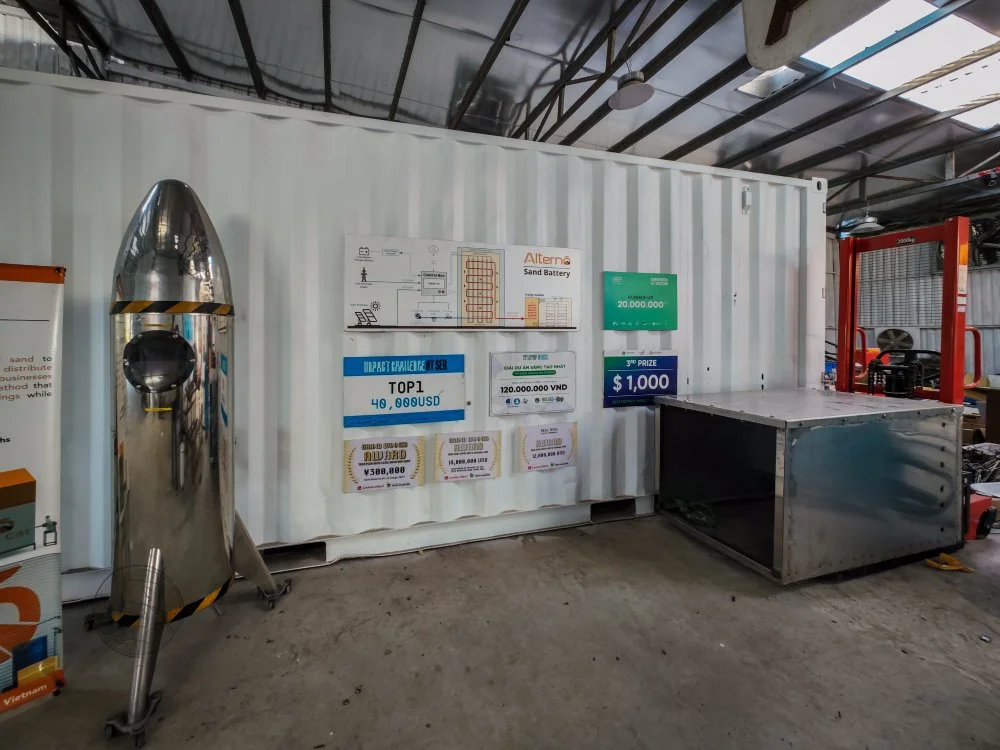
Oversized competition check plaques and grant banners displayed on Alterno workshop wall
Performative optics vs. engineering reality: Oversized competition check plaques and grant banners displayed on Alterno's workshop wall.

The Performative Trap of NGO/NPO Grants & Lessons for VCs

Early-stage climate and hard-tech investing in emerging markets faces a structural challenge: non-technical evaluators frequently award grant funding and competition badges based on narrative optics rather than legal IP ownership or engineering feasibility.

1. The Zero-Accountability Loop of NGO & NPO Impact Culture

Investors must recognize the zero-accountability loop inherent in non-technical NGO, NPO, and sustainability competition ecosystems:

  • Optics Over Engineering: Grant panels and competition juries are typically composed of non-technical evaluators who prioritize polished presentations, ESG buzzwords, and marketing statistics over raw engineering data, USPTO patent chains, or manufacturing feasibility.
  • Unearned Legitimacy Shields: Non-technical founders systematically leverage NGO grant trophies as an unearned proxy for technical validation. VCs who lazily rely on these awards assume due diligence was performed, when in reality no IP or legal audit ever occurred.
  • Institutional Moral Hazard & Zero Follow-Up: When an NGO-awarded startup collapses due to IP concealment or founder misconduct, the granting organization accepts zero accountability. They issue no public corrections, perform no post-award governance audits, and simply cycle to the next cohort for photo opportunities.
  • Performative Symbiosis of Event Hosts & Founders: Nowhere is this performative culture clearer than when major ecosystem platforms continue endorsing startups during active court trials. Despite ongoing wrongful termination and IP dispute litigation against Alterno, InnoEx leadership features Alterno on its flagship stage for InnoEx 2026 (InnoEx Post; Alterno Post). Startup leaders (Hồ Việt Hải & Nguyễn Quốc Nam) use these high-visibility PR appearances ("Transformation Stage") as performative shields to project stability, while event leaders gain green-tech marketing content — completely ignoring whether the entity featured is legally sound or evading judicial scrutiny.
  • Why Performative Evasion Persists Unchecked in Vietnam: Why can a startup under active court litigation and attempting illegal corporate dissolution continue winning state delegation spots (NIC Scale X Tokyo trip) and headline event features? Three systemic flaws enable this:
    • Vanity Metrics Over Audit Velocity: Program managers are evaluated on cohort numbers, delegation counts, and MOU volume rather than checking court dockets or business registries (dangkykinhdoanh.gov.vn).
    • The Institutional Saving-Face Shield: Gatekeepers default to public silence and plausible deniability to protect their own prior awards rather than admitting a featured startup faces founder IP theft or labor litigation.
    • Overseas Flag-Planting & Cross-Border Latency: Management exploits cross-border enforcement lag ("ve sầu thoát xác" entity swaps to Da Nang and Singapore) while harvesting non-binding MOUs in Bhutan, Japan, and Taiwan to project global growth to non-technical ESG evaluators.
Glass cabinet packed with competition trophies and award certificates
The competition trophy cabinet: Non-technical grant awards and competition trophies leveraged as an unearned proxy for technical due diligence.

2. Industry Benchmarks & Regulatory Citations

This institutional shift mirrors broader global and regional movements toward anti-greenwashing enforcement and rigorous hard-tech due diligence:

  • EU Green Claims Directive & Anti-Greenwashing Standards (2024–2026): Regulators now mandate that environmental claims and clean-tech marketing must be backed by verifiable empirical data and unencumbered legal IP provenance. Promoters who advertise unverified environmental benefits face severe regulatory liability.
  • SVCA & AVPN Due Diligence Guidelines: The Singapore Venture & Private Equity Association (SVCA) and Asian Venture Philanthropy Network (AVPN) have increasingly emphasized independent legal chain-of-custody audits and founder background checks to prevent impact-capital misallocation.
  • The Theranos & Nikola Precedents: Globally, the venture capital industry learned painful lessons from hardware and deep-tech scandals where founders relied on media hype, grant trophies, and staged demos to mask fundamental technical and governance failures. Vietnam's VC ecosystem is now undergoing that exact same maturity cycle.
Old VC Assumption Hard-Learned Reality New VC Standard
"Accelerator & NGO badges equal valid due diligence." NGOs and accelerators prioritize cohort PR and vanity metrics over deep legal/technical audit. Independent, third-party technical and legal due diligence before term sheet sign-off.
"Business founders can easily replace technical leads." Expelling the sole technical inventor creates catastrophic operational paralysis and invalidates core IP claims. Founder protection clauses safeguarding technical co-founders from predatory equity dilutive moves.
"NGO grant trophies prove commercial viability." NGOs reward performative presentations without evaluating hardware manufacturing feasibility or IP provenance. Focusing on unit economics, real factory pilot contracts, and verified commercial revenue.
"Founder charisma overrides corporate governance gaps." Charisma without governance leads to domain loss, IP disputes, and desperate retail crypto fundraising pivots. Rigorous governance enforcement, transparent cap tables, and mandatory audit rights.

5 Concrete Due-Diligence Standards for VCs

Drawing from my background on both sides of the investment table, I suggest five mandatory due-diligence standards that investment committees should enforce before deploying capital into hardware and climate-tech startups:

1. Enforce Independent IP Chain-of-Custody & Inventor Audits

Never rely on founder pitch decks or informal assertions of IP ownership. Investment committees must mandate:

  • Direct Patent Registry Verification: Perform direct cross-examination of official databases (USPTO, WIPO, IP Vietnam) to verify official inventor attribution and legal assignment contracts.
  • Inventor Consent Tranches: Tie capital releases to explicit, written confirmation from technical co-founders affirming clean IP transfer and unencumbered equity rights.

2. Audit Technology Readiness Levels (TRL) & Demand Step-by-Step Proof

In deep-tech and energy hardware, founders frequently claim advanced readiness—even asserting TRL 9 (full commercial deployment)—in pitch decks and marketing material. Achieving TRL 9 in thermal storage is notoriously difficult: it requires thousands of hours of continuous thermal cycling, structural fatigue testing, insulation containment validation, and certified industrial safety compliance.

A hardware startup cannot magically jump to TRL 9. Investment committees must educate themselves on the 9-stage TRL framework and demand documented, sequential engineering proof for every single milestone before validating readiness claims:

  • TRL 1–2 (Concept & Formulation): Theoretical principles and basic thermal storage concepts.
  • TRL 3–4 (Lab Proof of Concept & Component Validation): Experimental bench testing, heating element validation, and thermal mass data under laboratory conditions.
  • TRL 5–6 (Relevant Environment & System Prototype): Subsystem thermal modeling, CFD digital twin correlation, and prototype testing in relevant operational conditions.
  • TRL 7–8 (Operational Pilot & System Qualification): Full-scale prototype field deployment, continuous charge/discharge cycle logs, structural safety certification, and third-party industrial audits.
  • TRL 9 (Proven Commercial Operation): Continuous, proven commercial operation under real-world factory or utility conditions over extended operational lifespans.

Asserting TRL 9 without documented engineering telemetry, cycle logs, third-party safety certifications, and pilot records for TRL 3 through 8 is a major due-diligence red flag.

3. Audit Digital Infrastructure & Asset Custody

Loose corporate hygiene is an early warning sign of severe operational risk. VCs should require:

  • Corporate Ownership Verification: Confirm that primary domain names, DNS records, code repositories, and cloud accounts are legally registered under the corporate entity rather than personal founder accounts or third-party contractors.
  • Digital Maintenance Reserves: Mandate minimum cash reserves earmarked specifically for legal and digital infrastructure maintenance.

4. Audit Founder History & Proxy Contractor Patterns

Investigate operational history to ensure claimed technical capabilities are built by sovereign in-house teams. Investment committees should implement:

  • Historical Cap Table & Token Audits: Review founders' past ventures for abandoned ICOs, token sales, or unresolved retail crowdfunding liabilities.
  • Developer Commit Verification: Inspect GitHub commit histories to confirm that core technologies are developed in-house rather than assembled by recycled third-party proxies.

5. Institute Entity Swap & Restructuring Guardrails

Prevent unauthorized corporate maneuvers that attempt to evade legal liabilities or bypass investor governance. VCs should institute:

  • Multi-Jurisdictional Cross-Default Clauses: Legal provisions ensuring that litigation or restructuring in one jurisdiction automatically triggers default across all holding companies.
  • Board Approval for Operational Dissolutions: Explicit veto rights over any attempt to dissolve or liquidate operating subsidiaries.

The Hard-Tech Founder Playbook in a Post-Poisoned Market

For legitimate, physics-driven hardware and deep-tech founders in Vietnam, heightened VC scrutiny is actually an advantage. While performative pitchmen fail stricter DD checks, authentic engineers can stand out by providing immediate transparency:

  1. Provide an Open IP Data Room on Day One: Include certified USPTO assignment documentation, inventor agreements, and complete patent prosecution history upfront.
  2. Demonstrate Sovereign Technical Execution: Show verified in-house git commit logs, CAD/CFD models, and physical lab telemetry. Prove your core tech is built by your team, not external contractors.
  3. Maintain Bulletproof Corporate Hygiene: Keep domain assets, server infrastructure, and trademark filings centralized under official company ownership.
  4. Embrace Stricter DD: Welcome deep technical audits from international VCs. Investors who perform real DD are the ones who can actually add value to a hard-tech company.

Community Questions for Vietnam's Investor Network

As Vietnam's venture ecosystem matures past its initial hype cycle, I pose these questions to regional fund managers and LPs:

  1. How can investment committees balance public silence with the institutional responsibility to warn peer funds about predatory founder behavior?
  2. Will regional VCs establish a shared registry of verified IP assignments to prevent founders from claiming sole ownership of co-developed technology?
  3. What steps are LPs taking to hold fund managers accountable when early-stage due diligence fails to catch basic corporate governance breakdowns?