The Rise of the Legal Engineer: AI Automation, Cross-Border Litigation, and the Future of Law
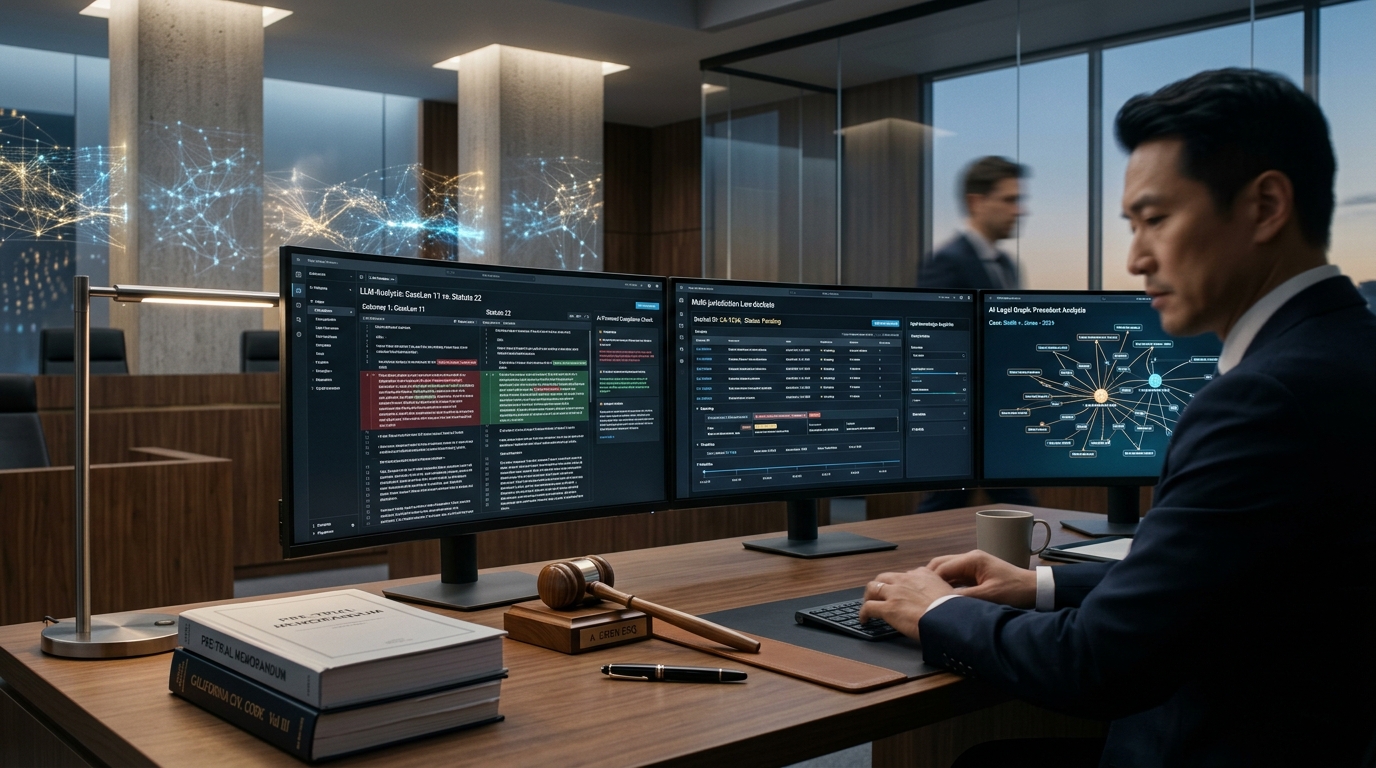
A few years ago, when GPT-4 first passed the US Bar Exam, a lot of people in the legal industry brushed it off as a neat party trick. Today, in August 2026, we are already looking at GPT-5.6, Claude Opus 4.7, and Gemini 3.7 Flash. Major international law firms are no longer debating whether AI works. Instead, they are actively hiring and training what they call Legal Engineers.
The video above does a great job breaking down how large firms are restructuring around AI tools. But watching a video is one thing; experiencing it firsthand in real-world legal battles is another. Over the last couple of years, managing corporate governance, IP disputes, and litigation across four different jurisdictions (Vietnam, Singapore, Japan, and the United States), I was basically forced into becoming a legal engineer for my own cases.
Here are my honest takeaways on what is really changing, what I see working every day, and why I believe studying law is still worth every penny.
1. What is Happening in the Industry
When GPT-4 came out, the common complaint from lawyers was that it made things up, hallucinated citations, and could not handle complex legal logic. That was true back then.
Today, the accuracy and reasoning capabilities of current frontier models have improved dramatically. We have moved from simple text generation to systems that can cross-reference hundreds of pages of filings, spot contradictions between separate witness statements, and draft structured legal briefs in minutes.
Because of this, the role of the Legal Engineer has emerged. These are people who understand the law well enough to know what needs to be done, but also know how to set up AI pipelines, prompt chains, and automated document analysis workflows. For law firms, this means routine paralegal tasks that used to take days can now be completed in an afternoon.
2. My Own Experience Across 4 Jurisdictions
When you find yourself dealing with cross-border disputes involving both civil law systems (like Vietnam and Japan) and common law systems (like Singapore and the US), the sheer volume of paperwork is overwhelming. You are looking at thousands of pages of court exhibits, corporate registry records, financial filings, and email trails.
Human reading speed and manual document review quickly become the biggest bottleneck. To keep up, I built my own daily AI setup:
- Gemini 3.7 Flash: I use its huge context window to ingest entire folders of court dockets, registry documents, and communication logs. Within seconds, it can build chronological timelines, map out entity relationships, and flag inconsistencies across English and Vietnamese records.
- Claude Opus 4.7: I rely on Opus for deep reasoning, analyzing specific contract clauses, drafting legal arguments, and preparing questions for hearings.
The jump in model accuracy with every release has been remarkable. Tasks that used to take me three full days of tedious manual cross-referencing now take less than half an hour of structured prompting and careful verification.
3. What Practicing Attorneys are Saying
This is not just something useful for tech founders. My attorney in Vietnam, who has been assisting me with corporate litigation, confirmed that he now uses AI tools in his practice every single day.
He uses it to generate fee quotations, draft letters of engagement, summarize incoming case files, and review draft agreements. What previously required him and his team hours of manual reading is now done in about one-tenth of the time.
With a lean team and an affordable monthly subscription ($20 to $200), a small practice can now operate with the turnaround speed and output that used to require a large team of junior associates. The playing field has completely changed.
4. Are Lawyers in Danger? Should You Still Study Law?
I get asked this often: Is the legal profession dead? Should young people still study law?
My answer is a clear yes and yes.
If your entire value as a lawyer is copy-pasting standard contract templates or charging hourly fees to manually read PDFs, then yes, your job is in serious danger. But if you actually understand the fundamentals of law, the profession has never been more valuable.
Here is why AI cannot replace real lawyers:
A. Accountability and Liability
An AI model can write a convincing 30-page legal brief in 20 seconds. But an AI cannot sign a court document, cannot hold a law license, cannot carry professional indemnity insurance, and cannot be held accountable before a judge. At the end of the day, clients and courts pay for human accountability and professional responsibility.
B. Strategy is Human Psychology
Litigation is not just about reciting statutes. It is about human behavior, negotiation tactics, and psychological timing:
- Knowing when the other side is bluffing because of financial pressure.
- Understanding how a specific judge or panel in Vietnam or Singapore tends to view a particular type of dispute.
- Deciding when to push forward aggressively and when to sit back and let the opposing party make a procedural mistake.
AI cannot read human emotions in a courtroom or judge the real intentions behind a settlement offer. It can give you options, but the actual strategic decision must come from human experience.
C. The Shift to Legal Architecture
The real question for law students is how to learn the craft when AI handles the entry-level grunt work. In the past, junior lawyers learned by doing document review for years. Going forward, the most successful students will be the ones who combine strong legal fundamentals with AI engineering skills from day one.
5. What This Means for You
If you are currently studying law, or if you run a legal practice, you have a massive advantage if you embrace these tools early:
- Learn the core principles deeply: You need solid legal fundamentals so you can quickly spot when an AI output is subtly incorrect.
- Treat AI as your research accelerator: Use tools like Gemini and Claude to handle the tedious data indexing, so you can spend your time on strategy, client relationships, and oral advocacy.
- Focus on what machines cannot do: Trust, courtroom presence, negotiation instincts, and real human judgment are skills that will stay relevant for decades to come.
AI is not here to eliminate lawyers. It is here to eliminate the boring parts of the job so you can focus on being an actual strategist.