My lessons on leadership
Originally published on Medium on August 8, 2018 · Written by hand, Pre-AI era.
Recently I had a chance to pause and reflect on my 10-year career startup journey. It was a lot of hard work, a lot of luck and a whole lot of mistakes and failing. One of the most important lessons I’ve learnt and, in a way, defined the person I am today is the lesson about leadership.
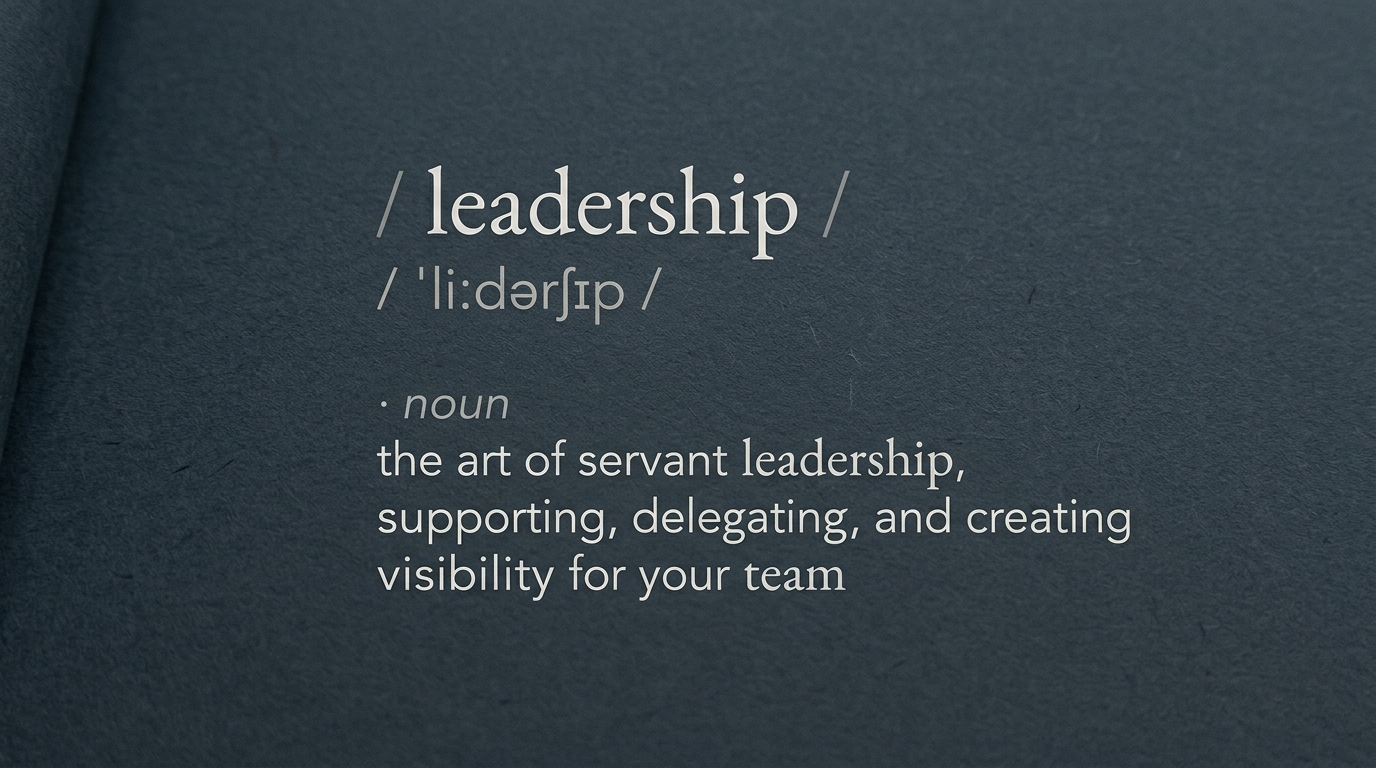
Since the early days, I did not believe in the concept of treating someone as subordinate. Starting with a handful of peers in the team then, my goal was to do everything I could to help my peers to do their job better than me. I have always believed in the notion that as a founding member of the team, I need to support my people regardless of what I have to do.
And then the company grew, team size doubled, tripled, went through a few restructuring and hit rock bottom once or twice. Before I could have a chance to take a break, I’m a manager of managers. Still holding on to the fundamental believe of being a servant to my team, I needed to learn how to delegate significant responsibility to my managers while supporting them to do their role. That means supporting my managers to support their teammates. I have known to frequently “skip level” to ensure the right people having access to the right tools for the job. While it might be a taboo to perform the act of skipping level “up/down” in a more established organisations, this is not even an issue given the super flat organisation Silicon Straits adopted since the beginning.
Having met enough founders in the start-up community within the region, I spotted a disturbing pattern when it comes to management and leadership: delegation without support. Especially the first-time founders, once grown to a certain size, they started to behave in a way that gives way to excuses of being too busy. They might be great at defining what needed to be done, and then shoot it away to the team. What happens after, whether the team have enough support is something they don’t usually have a good grasp on.
That brings us to the next important factor: check. This is an essential component of leadership yet very difficult to execute well. There is a fine line between micro management and checking. In my opinion, to check on someone without him/her feeling “controlled” is a skill one needs to master. I wouldn’t claim to be the expert yet on this, but generally I needed to build good enough rapport and then got to earn enough respect from the person.
The implicit difference between checking and micro-managing is intention. As a leader, I see myself as having the responsibility to help steering one’s approach towards solving the right problem, rather than dictating what the outcome should be and demanding results.
The last and most important lesson that I have learnt about leadership, the one that contributed the most to the success of Silicon Straits: show off. What it really means is that I found myself having to ‘help’ showing off one’s work to the rest of the team regularly. This helped creating visibility and recognition that otherwise are hidden from teams.
The above are just passing thoughts of the day. I feel each topic itself deserve a full long-form article to make it worth.