In 2026 AI Changed the SDLC Forever
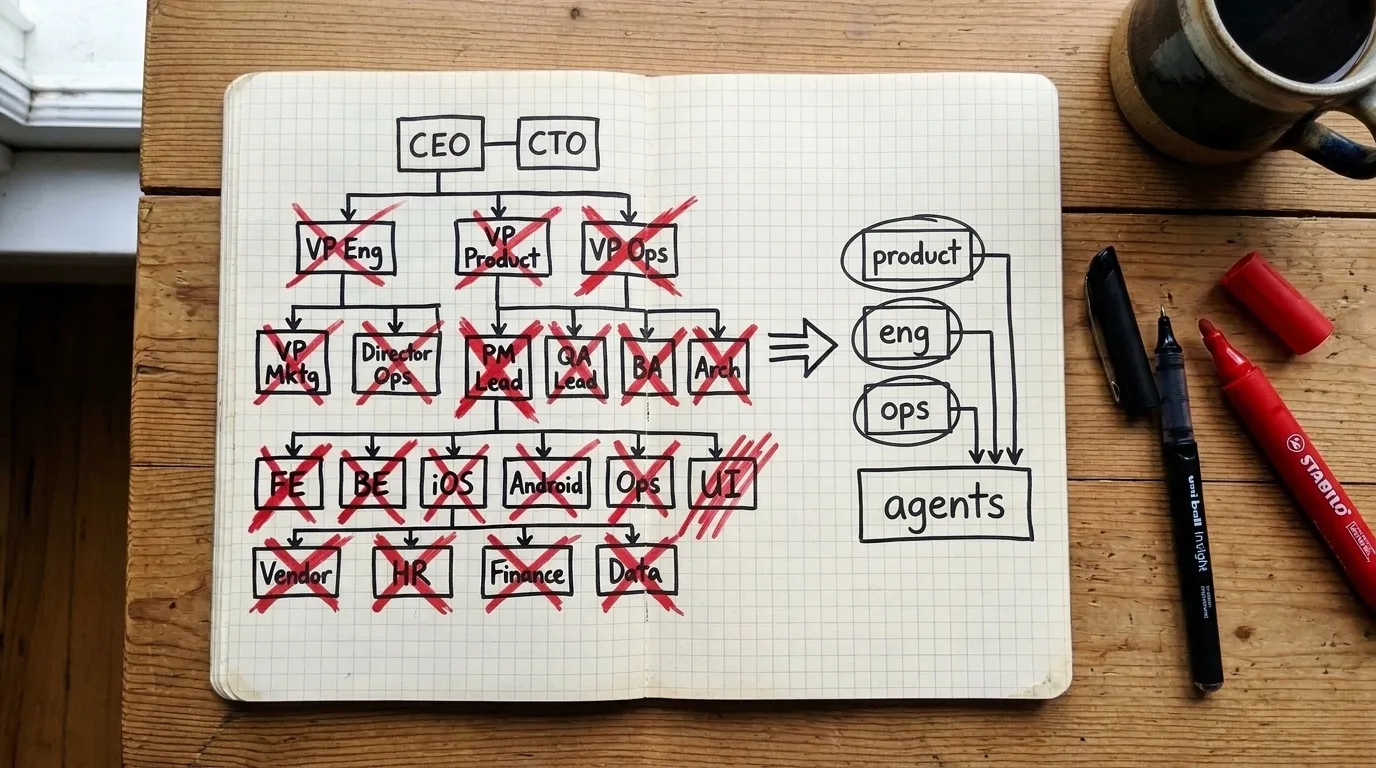
Most software teams are still structured for a bottleneck that barely exists anymore. Writing code used to be the slow, expensive part of building software, so companies built huge org charts around it.
In 2026, AI has permanently changed the software development lifecycle. Teams are shrinking fast, architecture carries far more weight, and tech leaders who stopped coding are running out of time.
From weeks and days down to hours and minutes
Years ago, I ran a 25-person team building a custom ERP for a retail client. Back then, normal software delivery had to be carved into strict silos: frontend, backend, iOS, Android, plus dedicated PM, BA, and QA layers just to move tickets from one desk to the next. Turning rough business requirements into a solid technical spec took weeks of meetings and back-and-forth.
Today, one capable builder with AI tools can take incomplete requirements and produce a solid architecture proposal in a couple of hours. The same time compression shows up in day-to-day debugging. Even two years ago, getting a straight answer on a deployment issue through layers of backend and DevOps staff took 2 days. Sitting down with AI directly, I can trace the same kind of problem in 15 minutes.
When feedback loops shrink like that, the old 20-to-100-person engineering org chart stops making sense. Every extra handoff adds delay and creates a buffer where nobody owns the full system. A small team of two or three strong generalists paired with AI agents can now ship and maintain systems that used to require dozens of specialised seats.
Architecture carries the real moats now
Shrinking the headcount pushes far more responsibility onto system architecture.
When AI can generate thousands of lines of code in an afternoon, typing speed is worth close to nothing. What decides whether a platform survives six months in production is the design underneath: clean boundaries and sensible data models, plus knowing how a new piece fits without breaking the rest of the stack.
If your architecture is sloppy, AI will happily help you ship a bigger mess ten times faster. Someone on the team has to hold the whole system in their head, review what the agents produce, and make the hard trade-off calls. That cannot be handed off to a PM layer or a vendor slide deck.
Design moved out of Figma into working software
The design stage changed just as much. In a traditional software cycle, you sit down with customers and ask them to imagine what they want, explain their business workflow in words, and wait while a UI or UX designer draws every screen in Figma.
Because delivery is so fast now, we flip that order. Once the database schema is solid and a rough working skeleton of the workflow is up, we ship it and demo it to the customer so they can click through the real thing. When they tell us what feels awkward in the workflow or the UI, we feed that feedback straight into AI and ship the changes the very next day.
The customer ends up participating directly in the development of the software, which is true BDD in a way teams could never pull off efficiently before. We do not even have a dedicated UI or UX designer on the team anymore. We maintain a clear design language and keep refining it alongside the product right up to the very last day of development.
100x more tests, run in seconds
Faster delivery also brought a big jump in output quality. With AI handling the QA heavy lifting, I now write at least 100 times more tests than what used to be realistic with a small QA headcount.
TDD used to be a real headache because you had to write tests before you even touched the feature. Now both happen side by side, or the AI generates the tests automatically as the code comes together. Even a few months ago, before Bun 1.4 and our lean stack, running a React test suite took anywhere from a few minutes to 15 or 20 minutes, and up to an hour in CI, just to find out if a build passed. Now on web apps I run a few thousand test cases across unit, integration, and end-to-end browser checks using bun test and Bun WebView, and the whole suite finishes in a couple of seconds on my Mac Mini M4.
That shows up directly in the bugs we see after release. Most issues reported to us lately come from a missing requirement or a blind spot nobody thought of beforehand. Clumsy UI errors and broken regressions barely make it past the test suite anymore.
We stopped paying for AWS, GCP and DigitalOcean
The same lean thinking goes all the way down to where the software runs. We stopped paying for AWS, GCP and DigitalOcean a long time ago and moved back to the basics: a cheap VPS.
Today a single VPS with 4 vCPUs and 8 GB of RAM hosts more than a dozen websites plus a few small ERP and CRM systems, and the CPU sits below 3%. All of that costs $10 a month. We don't even use Docker anymore.
It's insane how locked in we were, paying for expensive cloud hosting and maintaining bloated Docker and Kubernetes setups for workloads that never needed them.
CTOs who stopped coding will be outdated
This is where I think a lot of senior tech leaders are getting it wrong. Too many CTOs and CIOs stopped learning code years ago. Once they reach the executive layer, they treat engineering purely as people management or surface input-output vendor oversight, with very little grasp of how modern software is built and deployed.
I am pretty sure those CTOs will be outdated very soon. When an engineering org drops from 50 people down to a handful of builders and AI agents, there is no thick middle-management cushion left to hide behind. If a CTO cannot read code, inspect a repository, or challenge an architectural choice directly, they turn into a bottleneck.
I fell into the same trap myself. At different points I managed 25 people, later a hundred people, and then stepped into the CEO seat of a hardware company. My calendar filled up with investors and a steady stream of guests visiting the office. It looked 'busy' on the outside, at the end of the day I drifted further away from the groundwork every quarter. Without AI around back then, I ran out of hours to keep up with new tools and had to rely on backend and DevOps engineers to tell me what was possible.
Today, there is no good excuse to stay detached. You can sit with an AI model, inspect a codebase directly, and get straight technical answers in minutes. In an office or a boardroom, people are often 'too nice' and soften bad news on a weak design. AI models default to being polite too if you let them, once you tell them to tear your assumptions apart, they do not care about saving face and you spot your own architectural blind spots fast.
Why banning AI coding makes no sense
I keep seeing an ongoing debate where certain companies come out firmly against AI coding, and some bosses or CTOs strictly forbid their engineers from using AI tools at work. I do understand part of the worry: handing full AI coding responsibility to a junior developer will not produce good code either, I have been there and seen the mess it creates.
Still, banning AI entirely is just a choice I would not make at this point in time. I sit on the opposite side of the fence. Let AI take 99% of the coding, while keeping a capable human steering the direction and owning what goes into production at the end of the loop. Banning the tool just locks your team into last decade's speed while everyone else moves on.
Back to small teams and real building
All of this is a big part of why I left Ho Chi Minh City for Hoi An a couple of months ago. Stepping away from big-city meetings and heavy org charts let me get back to writing code and designing systems with a tiny circle of people I trust alongside AI agents.
The era of managing 50 specialists just to keep a software project moving is fading fast. If you lead engineering today, are you still close enough to the code to catch a bad architecture call yourself?