VC Due-Diligence Questions for Alterno Backers (SAND Part 23)

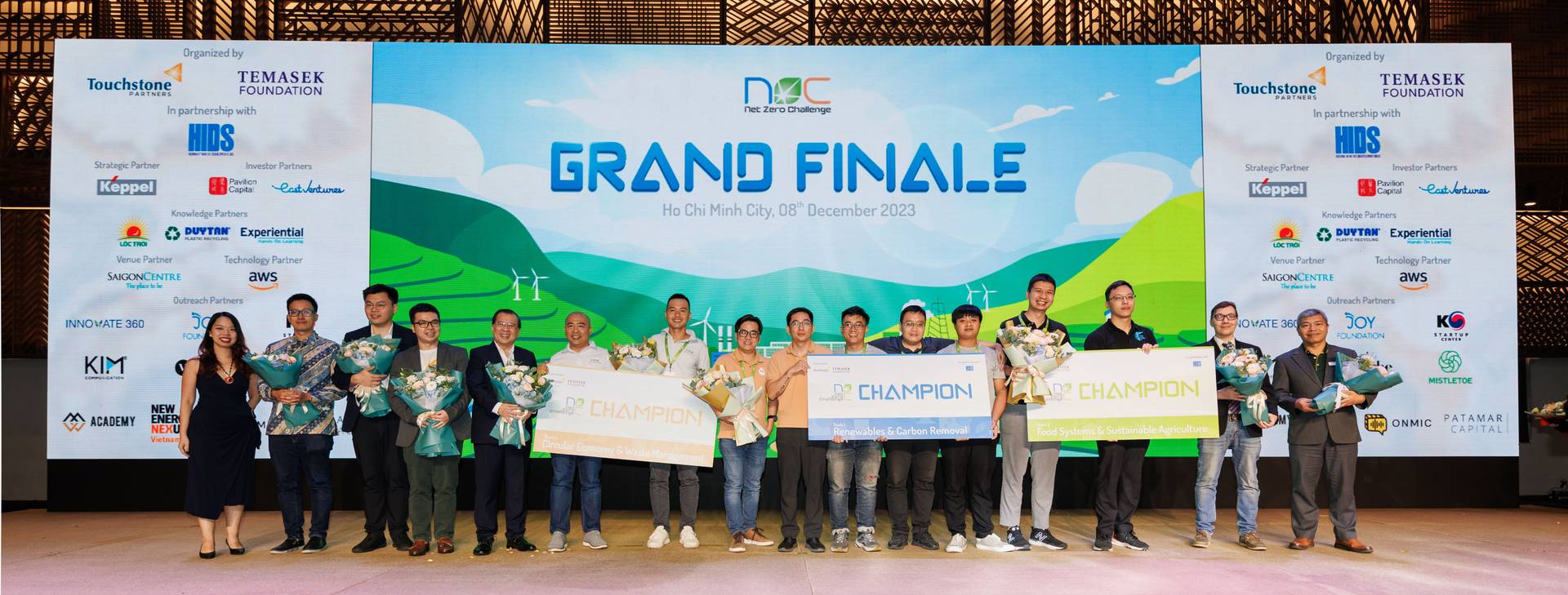
TL;DR: An open inquiry addressed to the Limited Partners (LPs) and Investment Committees of venture capital funds backing Alterno (including Antler, Touchstone Partners, The Radical Fund, and ADB Ventures). This document examines the due-diligence gaps during the March–July 2024 funding execution window, the ongoing multi-jurisdictional legal liabilities (including the April 15, 2026 court appeal and Official Dispatch No. 11034/SNV-LĐTLBHXH from the HCMC Department of Internal Affairs), and the fiduciary duty of VC managers to report core IP disputes and offshore restructuring to their LP Advisory Committees.
When venture capital funds invest in early-stage hardware startups, their Limited Partners rely on them to perform rigorous corporate, legal, and intellectual property due diligence. Throughout the preceding installments of this series, an extensive paper trail has been established using unalterable primary records: court dockets, USPTO patent registers, ACRA corporate filings, and official state regulatory guidance.
Here in SAND Part 23, I present this core governance question as a formal Limited Partner compliance audit. Building on the multi-jurisdictional entity map documented in SAND Part 21 and the psychological analysis of SAND Part 22, this installment asks: when management teams execute offshore entity shifts, bypass judicial proceedings, or launch parallel retail crypto crowdfunding schemes, the institutional funds that validated them face direct fiduciary accountability to their check-writers.
1. The 2024–2025 Execution Windows: Due Diligence vs. Entity Swaps
To evaluate institutional governance, one must examine the timeline of both the 2024 seed round and the subsequent 2025 funding expansion. Across both execution windows, primary corporate records reveal a recurring pattern of structural evasion:
- The 2024 Seed Window (March–July 2024): On March 1, 2024, Alterno Vietnam JSC executed Labor Contract No.
02-2024/HĐLĐ/ALTERNO, appointing me as CEO and Legal Representative. Simultaneous with securing commitments from Antler, Touchstone, The Radical Fund, and ADB Ventures, management initiated secret measures to exclude the primary inventor named on USPTO Patent12,130,086 B1and lay the groundwork for offshore entity redirection via US-based agencyzero.by.fifty. - The July 2024 Antler Exclusion: On July 9, 2024, I formally proposed stepping down as CEO to become Chief Scientist Officer (CSO), with a dedicated R&D budget to focus on the Sand Battery technology I invented. One day later, on July 10, 2024, co-founders Hai Ho and Nam Nguyen held a secret governance meeting with Erik Jonsson (Antler Vietnam representative) without my knowledge or participation—setting the pattern of exclusion that would escalate through the remainder of 2024.
- The October 2024 Patent Concealment Sequence: On October 1, 2024, Hai Ho told me the US Patent Application No.
18/623,773was merely awaiting "fee issuance." A subsequent IP strategy meeting regarding the patent involved Hai Ho, Nam Nguyen, Anh Hoang, and Erik Jonsson—I was again excluded, despite being the named primary inventor. On October 16, 2024, my corporate email (alterno.group) was terminated; that same evening, a scheduled Zoom meeting took place between Hai Ho, Nam Nguyen, and the US patent law firm handling the USPTO filing—without my knowledge or participation. This severed my ability to receive automated USPTO correspondence about the patent's status. Thirteen days later, on October 29, 2024, the USPTO formally granted Patent No.12,130,086 B1—on the exact same day I signed the share transfer contract, without any knowledge that the patent had been approved. The approval was hidden from me for approximately seven months, until I independently discovered it by accident on May 21, 2025 through an external patent registry search. To this day, the USPTO public record still lists my name as the original inventor on the granted patent. - The 2025 UntroD Window & The Da Nang Entity Swap (April 2025): As court proceedings in Vietnam escalated in early 2025 (with the court formally accepting the wrongful termination suit under Case No.
31/2025/TB-TLVA), management executed an immediate entity swap. On April 11, 2025—exactly four days prior to a scheduled court appearance on April 15, 2025 —management registered a new replacement entity named "Alterno Energy JSC" in Da Nang. The new entity was deployed to absorb fresh capital from UntroD Capital Asia (Leave a Nest) , effectively hiding the active, pending lawsuit against the original operating entity (Alterno Vietnam JSC) from incoming investors. Alterno management subsequently failed to appear at the April 15 court hearing.
This multi-year timeline raises fundamental governance questions for LP Advisory Committees: Did deal leads at Antler, Touchstone, ADB, and UntroD Capital Asia perform multi-entity due diligence across these execution windows, or were incoming investors repeatedly presented with clean replacement entities while active litigation was concealed?
2. State Regulatory Confirmation & The Active Court Appeal
Public PR campaigns often claim that founder disputes are merely internal operational disagreements. However, official government documentation under Vietnamese law establishes a vastly different legal reality.
Following the First Instance Labor Decision No. 18/2026/QĐXXST-LĐ (dated March 13, 2026 under Case No. 31/2025/TB-TLVA), a formal Appeal (Đơn kháng cáo) was officially filed with the regional court (Tòa án nhân dân Khu vực 1 - TP. Hồ Chí Minh ) on April 15, 2026, seeking complete reversal of the first instance ruling.
Crucially, on June 17, 2026, the Ho Chi Minh City Department of Internal Affairs (Sở Nội vụ TP. Hồ Chí Minh) issued Official Dispatch No. 11034/SNV-LĐTLBHXH regarding the legal nature of executive employment. Citing Article 3(5), Article 13(1), and Article 18(3) of the 2019 Labor Code, as well as Article 153 of the 2020 Enterprise Law, the state labor authority issued explicit legal guidance:
"Where two parties agree under any name, but the content shows paid work, salary, and management/supervision by one party, it is deemed a labor relationship."
This official guidance from the state organ governing labor law confirms that holding a minority share equity (0.05%) or a CEO title under Board authorization does not negate a statutory labor relationship. For VC fund managers who assured investors that domestic labor and social insurance liabilities were fully cleared, Official Dispatch No. 11034/SNV-LĐTLBHXH represents an unalterable regulatory reality.
3. Seven Fiduciary Questions for LP Advisory Committees
Limited Partners in venture funds possess contractual rights to inspect fund compliance, risk exposure, and portfolio governance. I submit seven specific inquiries for LP audit committees reviewing investments in Antler, Touchstone Partners, The Radical Fund, ADB Ventures, and UntroD Capital Asia:
⚠️ GOVERNANCE ALERT: Reported Dissolution Activity During Active Litigation
Attempted Corporate Shut-Down During Pending Dispute: Are LPs aware that co-founders Hồ Việt Hải and Nguyễn Quốc Nam sought to dissolve the primary domestic operating entity—Alterno Vietnam JSC—while court litigation (Case No. 31/2025/TB-TLVA) and an appeal were pending? Masothue.com lists Tax ID 0317669706 as "Ngừng hoạt động nhưng chưa hoàn thành thủ tục chấm dứt hiệu lực mã số thuế". Articles 207 and 208 of the 2020 Vietnamese Enterprise Law set conditions for dissolution; the linked public record and court filings should be reviewed for the status of this matter.
- Corporate Dissolution During Litigation: What disclosure was made to LPs about the effort to dissolve Alterno Vietnam JSC while court litigation and labor claims were pending? The Masothue.com listing for Tax ID
0317669706should be considered alongside the relevant court filings and Article 207 of the Enterprise Law 2020. - Material Litigation & Entity Swap Disclosures: Were LPs at UntroD Capital Asia informed that four days prior to a scheduled court appearance on April 15, 2025 (which management evaded), a replacement entity ("Alterno Energy JSC") was registered in Da Nang to receive investment funds while active labor litigation was pending against Alterno Vietnam JSC?
- Primary IP Inventorship Disclosures: Were investment committees informed that USPTO Patent
12,130,086 B1—which still lists Kent Nguyen as primary inventor on the public USPTO record today—was secretly approved on the same day the inventor signed an equity buyout, that the approval was concealed from the inventor for seven months, and that an Antler representative (Erik Jonsson) participated in secret IP strategy meetings from which the named inventor was excluded? Were committees further informed that domestic Vietnamese patent applications subsequently attempted to remove the inventor's name entirely? - Offshore Asset & Shell Entity Redirection: Did fund managers disclose the structural relationship between domestic operating companies and offshore vehicles such as
zero.by.fifty(US, led by Martin Gil),Chosen Digital(Thailand), and Kobashi Holdings (Japan), as detailed in SAND Part 21? - Recurring Crypto Crowdfunding Pattern: Were institutional board members aware that CEO Hai Ho launched
SandBlock(SAND Part 20)—a retail USDT tokenization dApp built by the same external contractor (chipchipzero) who previously built Hai Ho’s TriipMiles ICO smart contracts at Triip.me? This is not a dispute over software or firmware IP; it is a documented behavioral pattern in which the same CEO deploys the same proxy developer to launch unregulated retail crypto pools whenever institutional capital encounters friction. Did fund managers flag this recurring playbook during due diligence? - Public Promotion vs. Legal Liabilities: Why do deal partners maintain public radio silence regarding documented legal summonses while actively showcasing Alterno on portfolio pages (such as The Radical Fund's official portfolio page, still live in August 2026) without disclosing pending appellate litigation or state regulatory labor rulings?
- LP Shielding & Reputational Liability: What protocols are in place to shield institutional LPs from secondary reputational liability if retail crypto pools or domestic supplier claims trigger regulatory enforcement in regional jurisdictions?
4. Constructive Playbook: Day-1 IP & Governance Hygiene for VCs
Exposing institutional blindspots serves little purpose without providing a path toward structural improvement. To assist venture capitalists and LP auditors evaluating early-stage hardware deals in emerging markets, I propose a three-point due-diligence verification standard:
Step 1: Immutable IP Priority Linkage
Never rely on deck summaries or local patent office filing receipts alone. Require direct cross-examination between international priority filings (USPTO, PCT) and local national phase dockets to verify that primary inventor names match across every jurisdiction without post-filing deletion requests.
Step 2: Dual-Jurisdiction Statutory Labor Audit
In jurisdictions governed by statutory labor codes (such as Vietnam's 2019 Labor Code), verify that all executive employment agreements comply with local state agency guidelines (e.g., HCMC Department of Internal Affairs Dispatch No. 11034/SNV-LĐTLBHXH). Ensure that mandatory social insurance (BHXH) and statutory termination protocols are fully satisfied before signing investment waivers.
Step 3: Multi-Entity Capital Routing Verification
Audit concurrent entity footprints across offshore jurisdictions (Singapore ACRA, Thailand DBD, Japan NTA). Ensure that capital raised for hardware R&D is contractually restricted from routing into parallel unvetted web3 projects, crypto tokenization schemes, or external contractor proxies.
Accountability to the Capital Base
Venture capital ecosystem trust depends on transparency between fund managers and the Limited Partners who trust them with capital. When governance failures occur, maintaining silence does not mitigate risk—it compounds fiduciary liability.
This Open Letter stands as a permanent public record. LP Advisory Committees are invited to cross-examine these primary findings against their fund's internal audit logs and demand full governance transparency from portfolio managers.
Next: SAND Part 24 — Journalist Fact Pack provides the full document registry, master timeline, verification instructions, and institutional audit tracker for journalists, compliance officers, and regulatory bodies.