The Rise of the One-Person Dev Team
AIoT Coding Series
Five years ago, building a full-fledged SaaS product required a team. You needed someone for frontend, someone for backend, a designer, and ideally a DevOps engineer. Today, the concept of a "full-stack developer" has taken on an entirely new meaning.
We are entering the era of the one-person dev team.
From OpenClaw to the Norm
OpenClaw was just the tip of the iceberg. The founder, Peter Steinberger, wrote the entire stack in a few weeks, all by himself. And then, just a few days later, we saw an explosion of spin-offs: MiniClaw, NanoClaw, TinyClaw, OpenClawPi... the list goes on.
Watching this happen made me realize a fundamental truth: that's not even difficult anymore. It's the norm.
One person can - and should - cover the work of an entire department or team in small companies. Logically, this is the most efficient structure. When communication is singular - when the product manager, designer, and engineer are all the same person orchestrating AI agents - the overhead of handoffs, meetings, and misaligned expectations disappears completely.
The Speed of Developer Evolution
In the software development world, things are moving at an unbelievable speed. The reality is that if you are still stuck with traditional VSCode setups, or relying only on early-gen tools like Codex or GitHub Copilot, chances are you are already outdated by a long shot.
The tooling landscape has fractured into highly specialized, incredibly powerful segments. While OpenClaw dominates the amateur and hobbyist segment, Claude Code has long been the Swiss-army-knife for a lot of professionals.
But have you heard of Antigravity yet? It has been my most used AI tool for the last three weeks. And in today's AI timeline, three weeks feels like a very long time.
The True Bottleneck: Tokens and Screens
When I build out my own projects now, I'm not writing boilerplate. I'm orchestrating a fleet of specialized agents. I am conceptualizing the microservice, letting the agent generate the structure and logic, and then reviewing the output. The goal isn't replacing the human mind - it's elevating what a single human mind can manage.
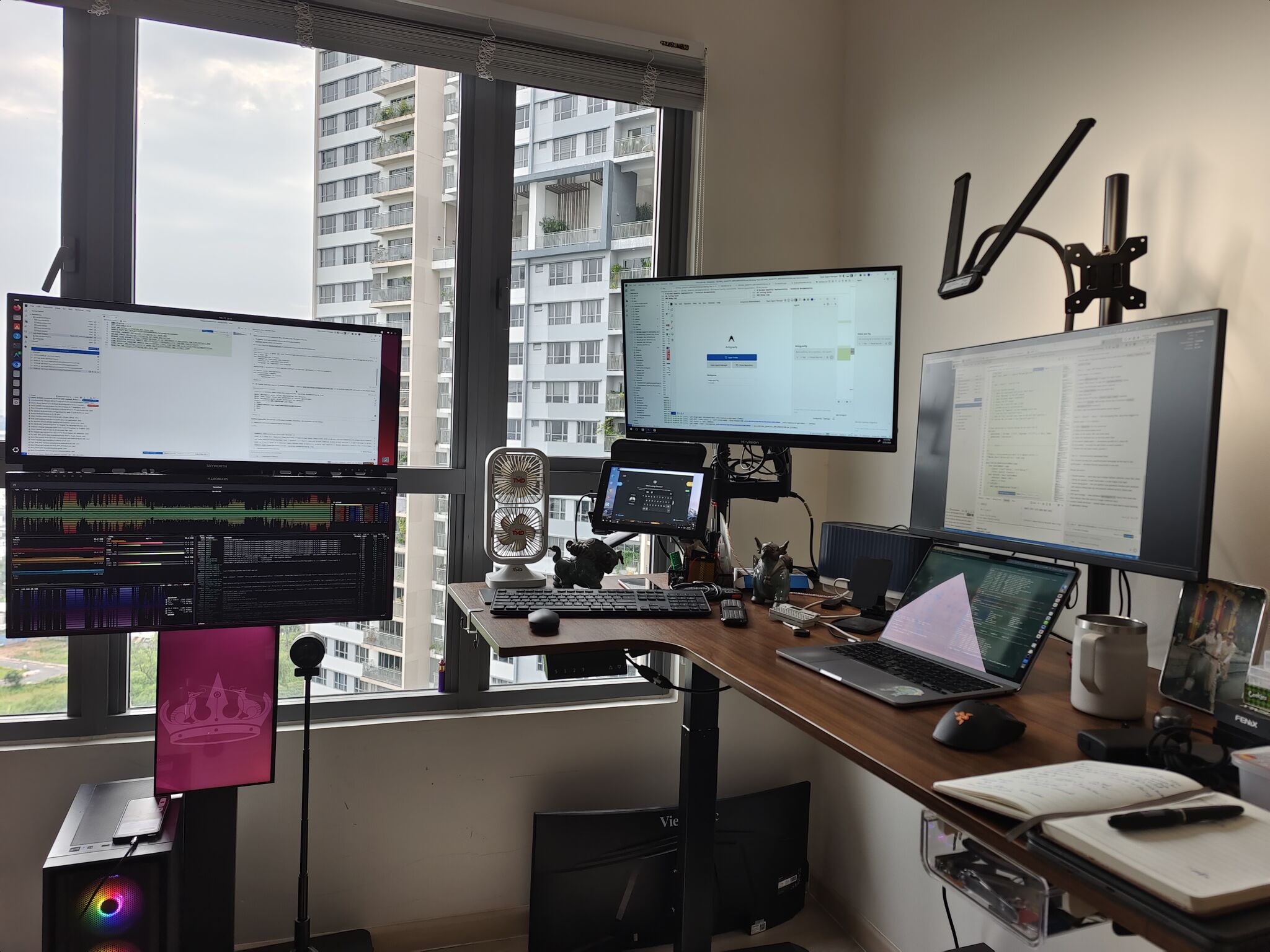
If there's one thing in common among all these platforms and the engineers using them to achieve 100x leverage, it's this: AI needs more tokens and more screens! 📺
You can never have enough context window, and you can never have enough display real estate to watch your agentic workforce execute in parallel. The future belongs to the developers who embrace this leverage.
Watch this great episode for more context: https://www.youtube.com/watch?v=hGdG-04TkDs