The Rise of Legal Engineers: How Systems Thinking and Frontier AI Disrupted Big Law

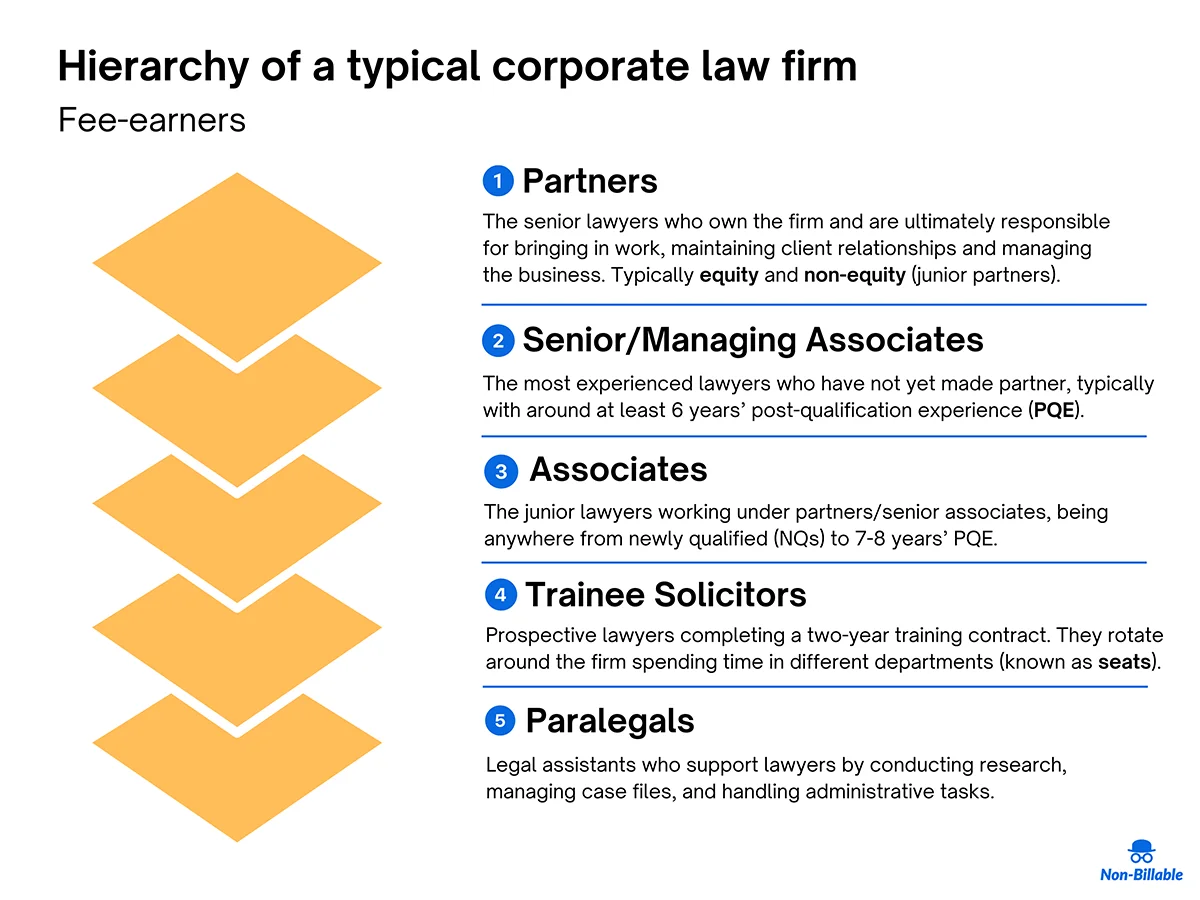
Commercial law today is where software engineering was in the late 1990s: an artisanal guild dominated by manual labor, opaque billing, and handcrafted process. In standard corporate litigation, senior partners billing $1,000 an hour supervise tiers of junior associates billing $300 to $500 an hour simply to read documents, highlight clauses, and cross-reference dates.
For decades, this "leverage pyramid" was treated as an unavoidable cost of doing business. But when you look at a multi-jurisdictional dispute through the lens of a systems engineer, litigation is not primarily a narrative contest—it is an information processing problem. It consists of unstructured data ingestion, entity extraction, temporal reconciliation, and statutory constraint verification.
Over the past three years, navigating cross-border shareholder disputes, patent inventorship claims, and corporate governance actions across Singapore, Vietnam, Japan, and the United States, I refused to finance that pyramid. Instead, I operated as a Legal Engineer: building automated multi-model pipelines with Gemini and Claude that ingested thousands of pages of court dockets, dual-language registries, bank ledgers, and forensic archives for less than $50 in compute.
The result was not just cost reduction; it was an entirely new division of labor. By automating the mechanical grind of Process Law, a solo engineer can match the analytical horsepower of a twenty-person discovery team—freeing human legal counsel to focus purely on high-stakes Judgment Law.
1. What Is a Legal Engineer?
In classical practice, the client hands disorganized boxes of evidence to a law firm, and the firm charges hourly rates to turn that chaos into a chronology. The client has zero technical visibility into the workflow, and the firm has no financial incentive to automate it.
A Legal Engineer inverts this dynamic. A legal engineer is a technologist or systems thinker who treats legal frameworks as code, contracts as specifications, and evidence archives as structured databases. Their role is not to replace the courtroom advocate or the solicitor, but to build the deterministic data pipelines that sit underneath substantive legal argument.
Where a traditional associate sees 500 scanned PDFs of mixed Vietnamese and English company filings, a legal engineer sees:
- An Ingestion Pipeline: High-throughput OCR and multi-million-token context windows capable of processing complete regulatory filing histories in minutes.
- An Entity-Relationship Graph: Cross-referencing directors, corporate secretaries, and share allotments across Singapore's ACRA, Vietnam's National Business Registration Portal, and Japan's National Tax Agency.
- A Contradiction Engine: Automated temporal checks that flag discrepancies between sworn witness statements, email headers, and contemporaneous airline manifests.
2. Case Study: Spotting the Temporal Contradiction
To see legal engineering in practice, consider how evidence validation actually unfolds in high-stakes corporate disputes.
In a disputed governance action, an opposing party produced photocopies of board resolutions claiming that key strategic transactions were formally authorized in-person on specific calendar dates. Under traditional discovery, an associate team would spend days manually cross-referencing meeting dates against calendar invites, expense receipts, and email timestamps.
Instead, our pipeline ingested the entire documentary corpus into Gemini's large context window: contemporary passport stamps, electronic boarding passes, hotel folios, and timestamped messaging exports across four countries.
Within seconds, the pipeline identified an irrefutable physical contradiction: on the exact calendar days the contested corporate resolutions were allegedly executed in-person, the key signatories were documented attending conferences thousands of miles away. The opposing narrative unravelled before a single formal deposition was scheduled.
3. The Economic Realignment: Dismantling the Leverage Pyramid
The traditional Big Law business model depends on an inverted leverage pyramid. Firm profitability does not stem from senior partner advisory hours; it stems from junior associates billing 2,000 hours a year on repetitive document review, contract comparisons, and boilerplate drafting.
The billable hour structurally punishes efficiency. If software can reconcile dual-language contracts, map indemnification exposures, and produce a comparative exhibit matrix in ninety seconds, billing by the hour becomes economically untenable.
This shift forces a clean demarcation between two fundamental aspects of legal work:
- Process Law (Automated by Legal Engineering): Indexing discovery bundles, verifying statutory deadlines, mapping corporate directorship changes, standardizing court exhibit formats, and tracking dual-language semantic shifts across revisions.
- Judgment Law (Exclusively Human Counsel): Courtroom oral advocacy, reading judicial temperament, assessing counterparty settlement appetite, structuring settlement leverage, and bearing personal professional liability before the court.
When clients hire legal engineers or deploy these pipelines internally, they no longer pay $30,000 for junior associates to learn the facts. They walk into senior counsel's office with a completed, hyper-referenced brief—buying pure, high-leverage judgment.
4. The Two-Model Cognitive Architecture
Operating across civil law (Vietnam), common law (Singapore), administrative agencies (Japan), and patent registries (USPTO) requires specialized cognitive roles. A single generic prompt will hallucinate; a multi-model pipeline enforces verification.
| System Layer | Model Role | Core Competency | Operational Output |
|---|---|---|---|
| Gemini (Flash / Pro) | The Forensic Ingestion Engine | Multi-million token context, native multi-lingual OCR, image parsing. | Ingests 2,000+ pages of mixed exhibits, extracts master timeline, cross-checks dates across currencies and languages. |
| Claude (Opus / Sonnet) | The Statutory Deduction Engine | Rigorous statutory logic, cross-clause reasoning, procedural drafting. | Tests claims against statutory thresholds, validates procedural time limits, formats court-compliant handoff dossiers. |
The 4-Step Verification Chain
- Verbatim Extraction: Extract only primary source quotes, statutory citations, transaction sums, and verified filing stamps without model interpretation.
- Registry Verification: Cross-reference extracted claims directly against official registry filings (e.g. comparing ACRA BizFile lodgments with Vietnamese corporate registration dockets).
- Contradiction Mapping: Test witness assertions against contemporaneous financial ledgers, email headers, and corporate communications.
- Counsel Handoff Dossier: Synthesize verified findings into a pinpoint brief with exact exhibit tabs, statutory citations, and procedural options for trial counsel.
5. The Mike Ross Paradox: Photographic Memory Is an API Call
In the legal drama Suits, Mike Ross was depicted as an anomaly because of his photographic memory: he could read thousands of pages of obscure filings and instantly spot a hidden contradiction.

In 2026, large-context frontier models have commoditized Mike Ross. Every engineer with an API key possesses photographic recall over millions of words of evidence, filings, and case transcripts.
What cannot be commoditized is Harvey Specter: the human intuition for reading counterparty dynamics, evaluating judicial temperament, timing procedural maneuvers, and negotiating resolution under pressure. By letting software absorb the administrative burden of Process Law, legal engineers empower human advocates to practice at the very peak of their craft.
6. Principles for the Modern Legal Engineer
- Master the Doctrine Before Prompting: A model cannot compensate for ignorance of civil procedure or statutory frameworks. You must understand the relevant statutes (whether Singapore's IRDA, Companies Act, or procedural court rules) to construct meaningful verification chains.
- Automate Discovery, Purchase Pure Strategy: Do not pay external counsel to do OCR, sort emails, or draft chronologies. Build the forensic brief yourself and retain counsel for strategic validation and courtroom advocacy.
- Information Asymmetry Creates Leverage: When a counterparty assumes you will fold under discovery costs, a deterministic legal engineering pipeline turns their paperwork volume from an intimidation tactic into their greatest vulnerability.