Sand Battery Simulation with AI
Sand Battery Series
Recall back to the early days of the Sand Battery when no one really knew what a Sand Battery or thermal storage even was. It was a time of intense exploration and finding ways to communicate an entirely new concept to the world.
I often look back and wish I had the level of AI sophistication we have now. If I had access to tools like Antigravity and Opus 4.6 back then, building out the explanation website and all the complex thermal simulation visuals would have been a breeze. Instead, we had to rely on more physical, manual methods to get our point across.
The 3D Printed Models
Since we didn't have the luxury of generating high-fidelity AI simulations in an afternoon, what we came up with at the time was printing 3D models. We designed the internal structures - from the heating elements to the insulation boundaries - and printed them piece by piece so people could physically touch and understand the true origin of the technology.
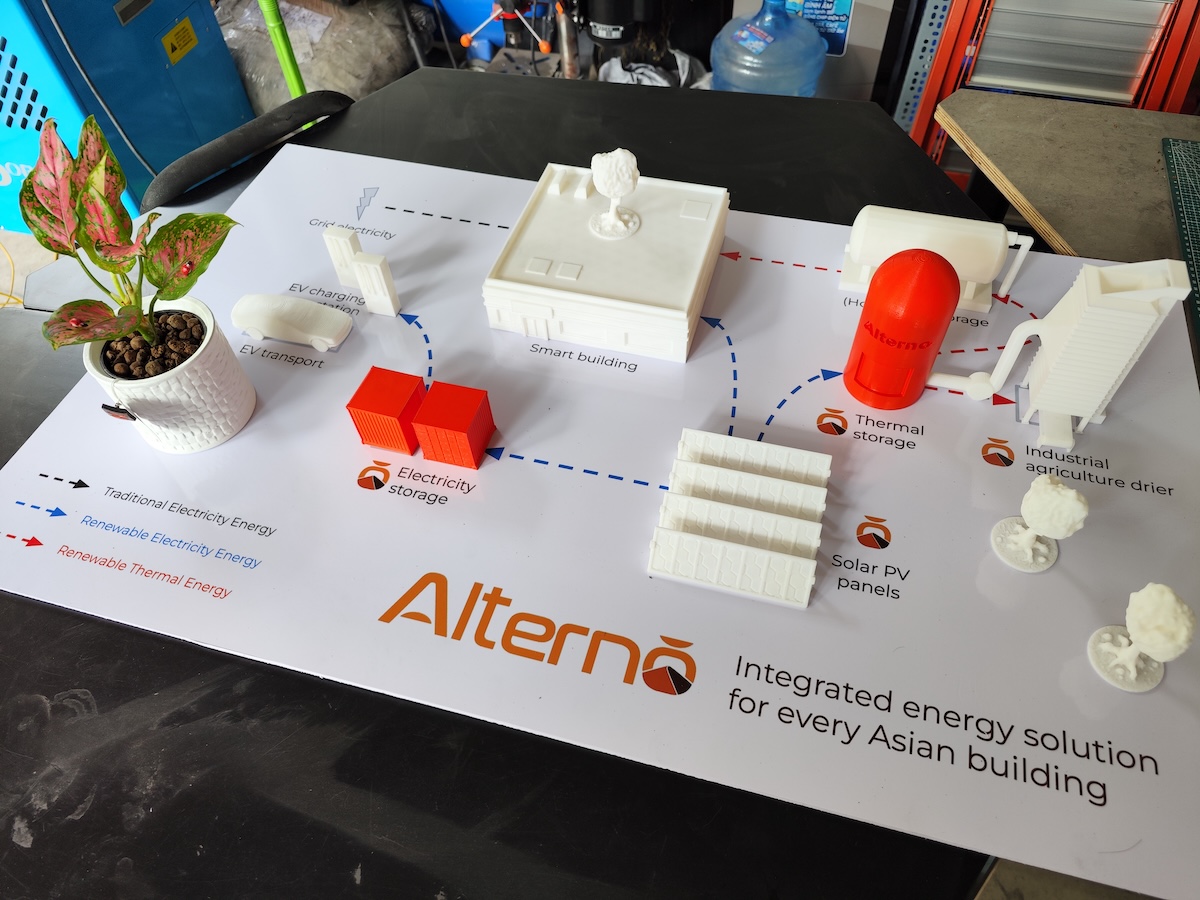
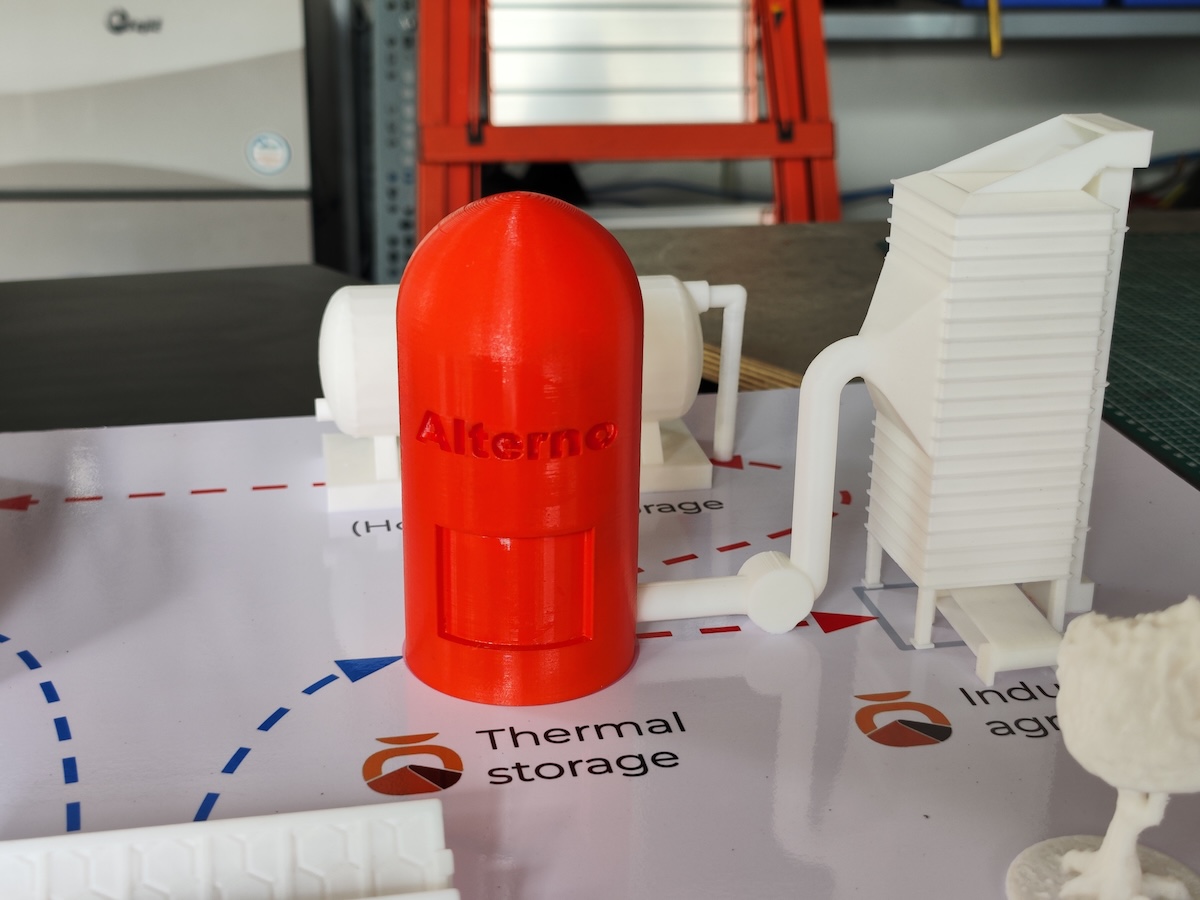
These tactile models were incredibly effective for early investors and partners, serving as the physical precursor to the digital models we rely on today.
The AI Advantage
Today, the difference in building and simulating is night and day. With agents orchestrating complex workflows, you don't need a massive team to spin up a fully interactive simulation environment or a polished product website. A single developer with the right AI stack can do what used to take specialized departments weeks to accomplish. In fact, you can see the result yourself in our interactive Sand Battery experiment.
But it doesn't stop at interactive illustrations. With the profound level of machine intelligence we have access to today, running real Computational Fluid Dynamics (CFD) simulations has become easier than ever. We can move far past early physical models and directly create true-to-life digital twins - a capability that NVIDIA recently made vastly more accessible. An entire physical simulation lab can now be built and tested completely in silico, optimizing thermal boundaries long before we even touch a grain of sand or a heating coil.
In fact, the contrast is entirely stark when you look at certain legacy entities still clinging to the old way of doing things. Take alterno.net, for example. The website has been remarkably quiet, practically dead since 2024, without a single meaningful update. I suppose when a team doesn't truly understand how to build with "AI" - and relies almost entirely on copying and pasting what others have done - it becomes incredibly difficult to keep the lights on and the facade up.
Technology moves fast. Those who adapt to the true AI era build the future; those who don't are just left maintaining a static WordPress page.
Continue Reading
Sand Battery
The Alterno Lawsuit Timeline: Corporate Restructuring and Document Discrepancies
A chronological, evidence-based review of the legal timeline, corporate restructuring, and document inconsistencies surrounding the Alterno management dispute.
Sand Battery
Sand Battery IP Dispute: Patent Changes and Unpaid Compensation
When a patent changes hands behind closed doors, someone usually pays the price - here is the paper trail they hoped would stay hidden.
Sand Battery
Sand Battery Legal Fight Update: Court Documents, Claims, and What Happens Next (SAND - Part 16)
Legal battles eventually bring out the quietest whispers into public court records - and the latest filings change the narrative entirely.