How I Used AI to Fight a Multi-Jurisdiction Lawsuit Without a Law Firm

When you are pulled into high-stakes commercial litigation across four different legal jurisdictions (Vietnam, Singapore, Japan, and the United States), traditional law firms will quote you hundreds of thousands of dollars in billable hours just to read the paperwork. In a standard corporate firm, senior partners billing $1,000 per hour delegate document review to tiers of junior associates billing $300 to $500 per hour to manually sift through thousands of exhibits.
I refused to finance that pyramid. Over the last three years, facing cross-border shareholder disputes, patent inventorship claims, and corporate governance actions, I built an automated two-model AI pipeline using Gemini and Claude. The system ingested thousands of pages of court dockets, contested corporate minutes, tax filings, and forensic chat archives across English, Vietnamese, and Japanese, replacing an entire team of discovery paralegals.
The result was asymmetric legal warfare: a solo founder matching the analytical horsepower of a full litigation department for less than $50 in API costs.
1. The Smoking Gun: Catching Falsified Board Minutes with Gemini
To understand the power of legal engineering in active litigation, look at how forensic evidence discovery actually plays out.
In a disputed shareholder action, an opposing party submitted photocopied board resolutions claiming corporate decisions were authorized on specific dates. A human legal team would have taken weeks to manually compare those signatures against flight logs, travel calendars, and messaging records.
Instead, I dumped the entire evidence archive into Gemini's multi-million-token context window: contemporary passport stamps, airline boarding passes, email headers, hotel receipts, and timestamped WhatsApp chat exports.
Within seconds, the model flagged a critical temporal contradiction: on the exact calendar days the contested corporate resolutions were allegedly signed in person, the key signatories were physically out of the country participating in recorded events thousands of miles away. The opposing party's core evidentiary claim collapsed before formal discovery even commenced.
2. The Collapse of the Big Law Leverage Pyramid
The business model of corporate law firms has long rested on an inverted leverage pyramid. A firm's profits do not come from senior partner brilliance; they come from junior associates logging 80 hours a week on manual document discovery, contract redlining, and boilerplate drafting.
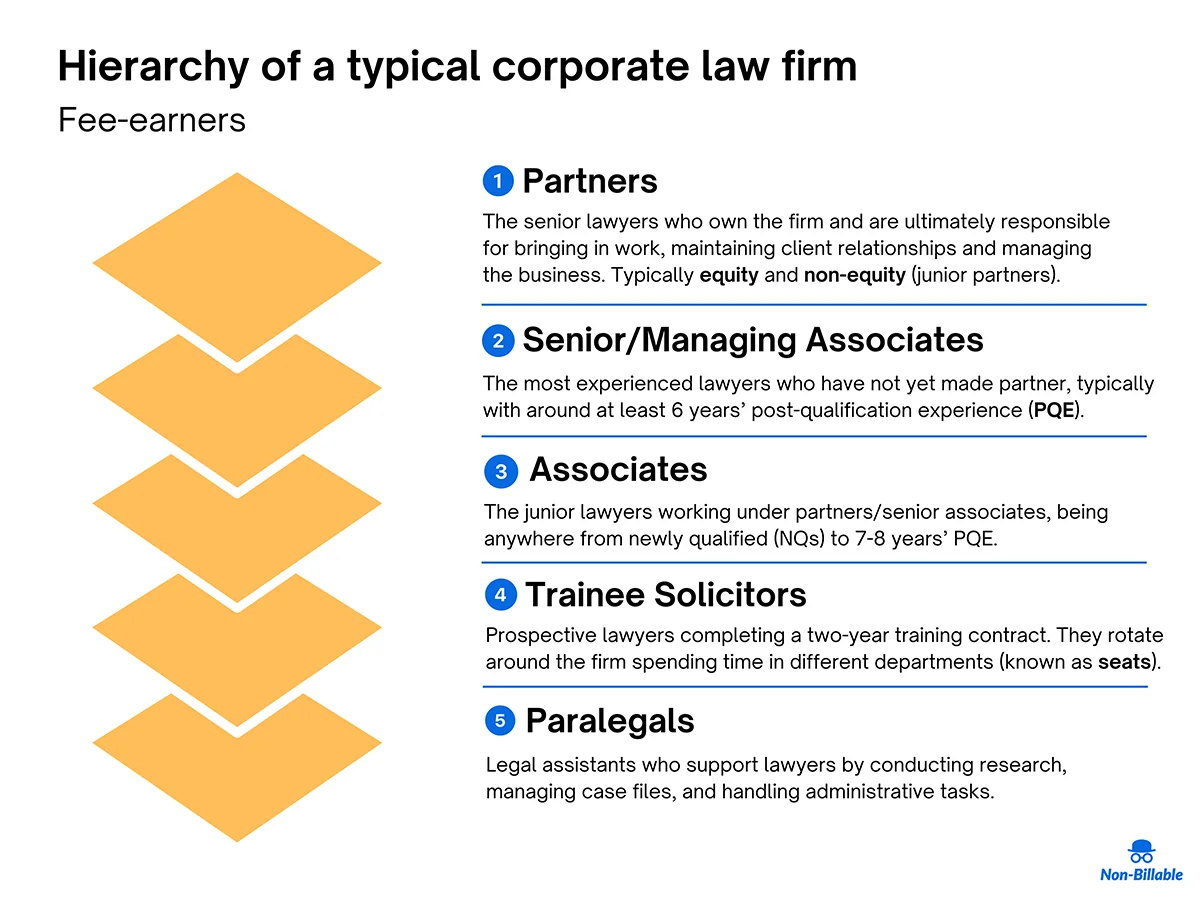
The billable hour structurally penalizes efficiency. When an automated AI pipeline can index 1,000 pages of cross-border exhibits, extract every clause concerning indemnification, and format the results into a comparative matrix in ninety seconds, the billable hour model is rendered obsolete.
This economic shift forces a clear division between two domains of legal practice:
- Process Law (Automated by Software): Indexing discovery bundles, reconciling dual-language corporate registries, building master chronologies, drafting transmittal letters, and spotting semantic modifications across contract drafts.
- Judgment Law (Strictly Human): Courtroom advocacy, assessing judicial temperament, evaluating counterparty solvency and settlement appetite, formulating negotiation leverage, and bearing personal professional liability.
3. The Two-Model Cognitive Architecture
Managing litigation across Vietnam (civil law), Singapore (common law), Japan (administrative procedures), and the US (USPTO patent filings) requires a specialized division of labor between frontier models.
| Model | Role | Core Strength | Real-World Output |
|---|---|---|---|
| Gemini (Flash / Pro) | The Ingestion Engine | Multi-million token context window, native OCR, multi-lingual parsing. | Ingests 2,000+ pages of mixed exhibits, extracts master chronologies, maps cross-entity directorships. |
| Claude (Opus / Sonnet) | The Statutory Barrister | Deep statutory deduction, strict logic validation, precise legal drafting. | Evaluates statutory breach thresholds, drafts hyper-referenced counsel dossiers, crafts litigation battle cards. |
The 4-Step Prompt Chaining Workflow
Asking an AI to simply "review this lawsuit" generates shallow, hallucinated summaries. Real legal engineering requires multi-step verification chains:
- Verbatim Extraction: Extract only direct quotes, statutory section references, monetary amounts, and verifiable dates from primary source exhibits.
- Registry Cross-Referencing: Match extracted quotes against official corporate registry filings (e.g. cross-referencing Vietnamese National Business Registration records at
dangkykinhdoanh.gov.vnwith Singapore ACRA filings). - Contradiction Matrix: Automatically highlight mismatches between witness claims and contemporaneous financial ledgers or email headers.
- Pinpoint Brief Preparation: Format verified findings into court-ready comparative dossiers with exact page and line references for trial counsel.
4. Decoding Corporate PR and Defensive Statements
At its core, a large language model is a statistical map of human language patterns across formal registers and professional idioms. In commercial disputes, this makes LLMs exceptional at forensic communication analysis.
When embattled companies face legal action, corporate PR teams and executives frequently post carefully spun statements on LinkedIn or Facebook to project stability to investors. Often, they paste raw AI-generated text into their public updates.
An engineer with a frontier model can deconstruct this messaging in seconds:
- Stripping Performative Fluff: Isolates factual assertions by stripping away synthetic enthusiasm and vague buzzwords.
- Catching Semantic Downgrades: When a company quietly shifts language from "commercial delivery complete" to "advancing customer validation trials", the model immediately detects the milestone failure.
- Uncovering Defensive Motivations: By analyzing the structural posture of a public announcement, the model identifies what incoming regulatory filing or investor query the counterparty is attempting to preempt.
5. The Mike Ross Paradox: Every Engineer Has Photographic Memory
In the television show Suits, Mike Ross was depicted as superhuman because of his photographic memory: he could read thousands of pages of obscure case law and spot hidden contractual contradictions in seconds.

In 2026, large-context AI models have commoditized the Mike Ross superpower. Every engineer with an API key now has photographic memory over millions of words of discovery exhibits.
What remains rare and valuable is Harvey Specter: the human instinct for negotiation timing, reading counterparty risk tolerance, and orchestrating settlement leverage. Software absorbs the administrative grind of Process Law so human practitioners can focus entirely on strategic judgment.
6. Practical Lessons for Founders Facing Legal Battles
- Learn Substantive Doctrine Yourself: You cannot spot hallucinations or invalid legal deductions unless you understand statutory thresholds and civil procedure rules yourself. AI is a force multiplier, not an excuse for ignorance.
- Automate Discovery, Buy Pure Judgment: Use automated pipelines to build chronological matrices and exhibit binders. When you engage external trial counsel, hand them a finalized, hyper-referenced brief. You will save tens of thousands of dollars in wasted associate discovery time.
- Exploit Cost Asymmetry: Well-funded opponents rely on expensive firms to intimidate smaller teams with paper volume. When you can analyze their 500-page filing in ninety seconds for fifty cents, their cost advantage vanishes.